A new teaching approach implemented in CHEME 6400 is reshaping how students learn about polymeric materials – and how their progress is graded.
The course, which enrolls senior and graduate students from various disciplines, has undergone a significant transformation to address contemporary challenges in polymer science such as sustainability, emerging technologies like 3D printing, and innovative materials development.
At the core of this educational innovation is a mastery-based grading system that allows students to revise and resubmit assignments with reflective analyses of their improvements. Rather than receiving numerical grades, students’ work is evaluated on a scale from “well-developed” to “no evidence,” accompanied by detailed feedback for improvement. This approach shifts the focus from grade pursuit to genuine understanding and skill development.
“Traditional assessment methods weren’t sufficient for evaluating students’ design abilities and creative problem-solving skills,” said Rong Yang, professor of chemical and biomolecular engineering who instructs the course.
The course’s learning outcomes have been carefully structured to ensure students master fundamental concepts while developing practical skills. These include understanding polymer fundamentals, mastering synthesis techniques, assessing sustainability impacts, and developing experimental design capabilities. The curriculum particularly emphasizes the ability to break down polymeric product functions to molecular attributes and design polymers for specific applications.
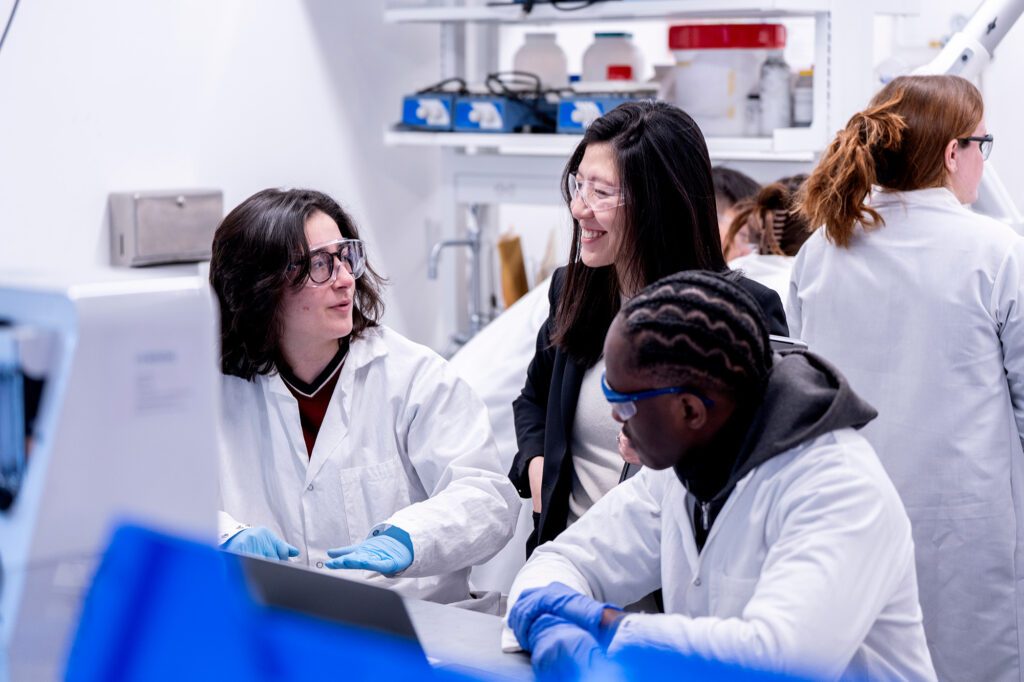
A notable feature of the new approach is the integration of hands-on experimental modules focused on polymer sustainability. Students engage in practical exercises, such as extracting sodium alginate from seaweed, while developing research protocols and testing hypotheses. This experiential learning component uses a scaffolded protocol template that guides students through hypothesis formation and experimental design, ensuring a structured yet creative approach to scientific investigation.
The experimental module is complemented by a conceptual design project where students analyze petrochemical-derived polymers and propose renewable alternatives. This project integrates literature evaluation, sustainable design principles, and innovative solution development, requiring students to apply their theoretical knowledge to real-world sustainability challenges.
Assessment in the course involves multiple components, including pre-lab homework, post-lab analysis, peer evaluations and comprehensive project deliverables. Students are required to submit grade reflections at the semester’s end, summarizing their growth and presenting evidence-based arguments for their final grade within their performance-matched bracket.
The initial implementation has shown promising results. Students have demonstrated increased engagement and creativity, particularly in experimental modules. The reduced emphasis on grades has led to more open discussions about learning objectives and fostered a collaborative learning environment. Teaching assistants report that the new system has actually streamlined their grading process, with fewer disputes over point deductions and more meaningful interactions with students.
“This course was more interesting to me than others and it also more fairly measured my understanding of the material,” reported one student. “Assignments were focused on understanding rather than simply getting the correct answer, which helped guide my learning and make sure I actually connected with the material.”
For her work developing the mastery-based grading system, Yang was recognized by the Office of the Vice Provost for Academic Innovation and the Center for Teaching Innovation with a 2025 Creative Teaching Award.
Looking ahead, Yang plans to enhance the program by increasing opportunities for experiential and collaborative learning, to strengthen the connection of the fundamental concepts taught in a classroom to creative problem solving for real-world problems.