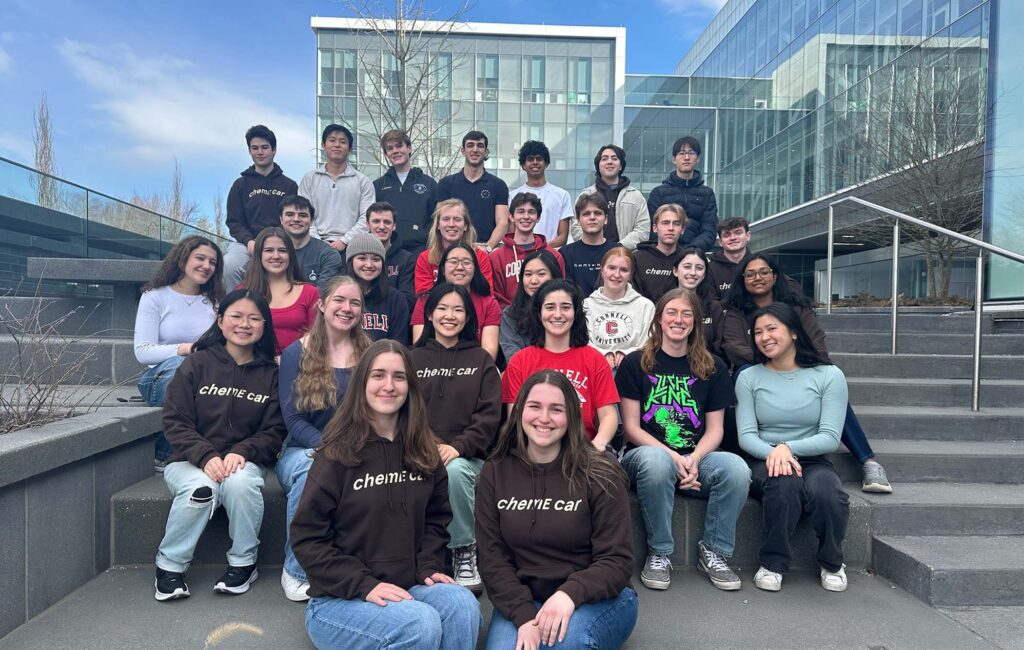
What happens when you hand a group of passionate, curious and determined students a shoebox-sized car and tell them to make it move, and stop, using only chemistry? At Cornell, you get ChemE Car, a competition-based, student-run project team that blends scientific innovation with camaraderie, resilience and a relentless pursuit of excellence. With nearly 50 members from a diverse mix of majors and backgrounds, ChemE Car isn’t just about competition, it’s about transforming students into confident engineers, thoughtful collaborators and bold problem-solvers.
In recent years, the team has faced everything from post-pandemic uncertainty and lab access shutdowns to unconventional competition surfaces and last-minute technical setbacks. But with each challenge, the team has grown stronger, not just as competitors—winning back-to-back first-place finishes at Regionals and Nationals last year—but as a community defined by its commitment to safety, development and teamwork.
Twenty-plus years in the making
Founded in 2004, Cornell’s ChemE Car team is united by the goal of designing and constructing a car powered by a chemical energy source that can safely travel a specified distance and stop precisely. While most team members are chemical engineering majors, the team also includes students from a wide range of colleges and academic backgrounds—diversity that fuels collaboration across specialized sub-teams dedicated to technical components and broader team operations.
Guided by a student-centered mission and four core priorities—safety, technical development, professional growth and competitive success—ChemE Car welcomes students with little or no prior experience and transforms them into capable engineers, project leaders and engaged community members. Along the way, students gain invaluable technical and professional skills, build lasting friendships, and join a supportive alumni network that spans over two decades.
Like a toy, but smarter
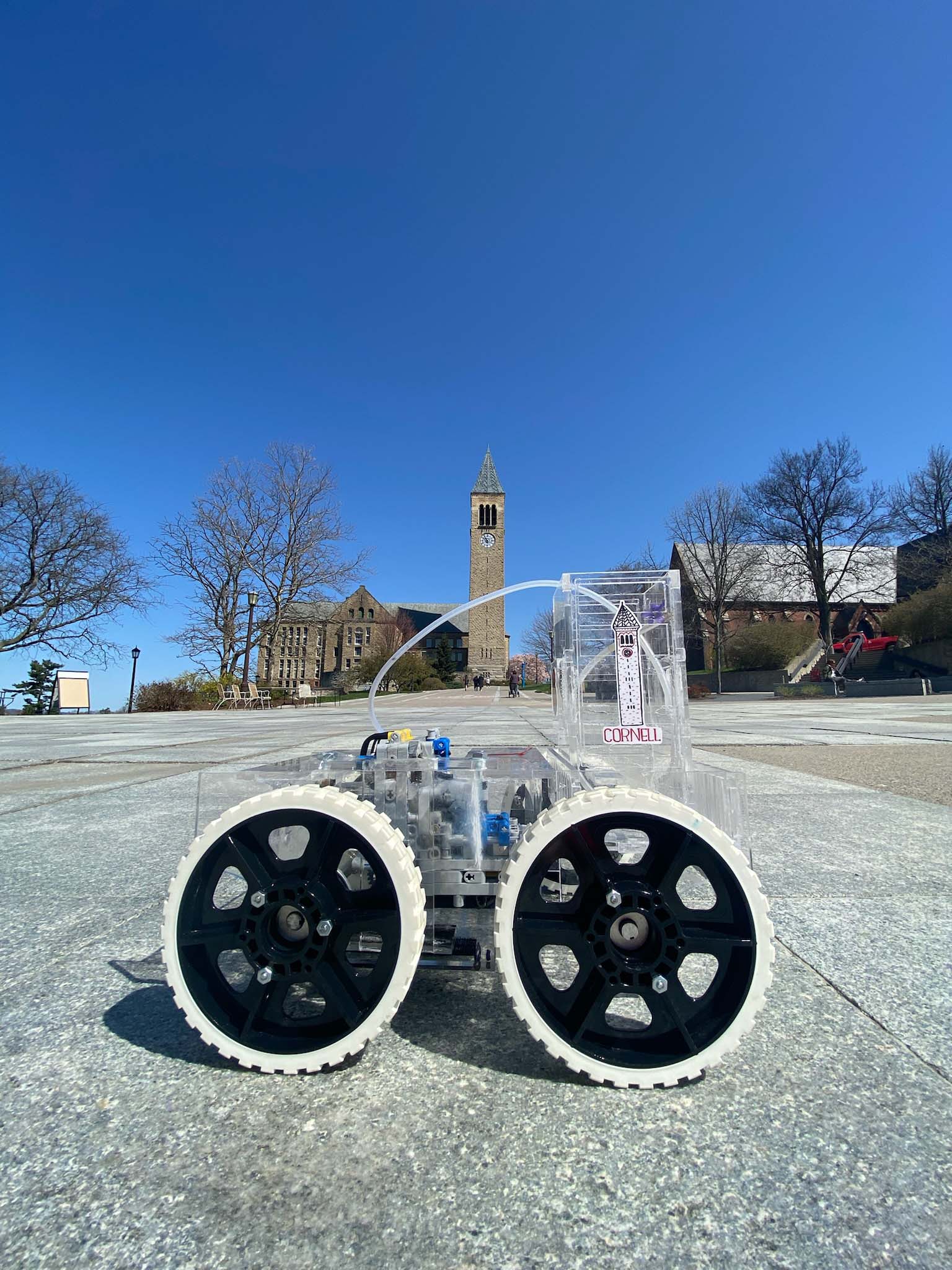
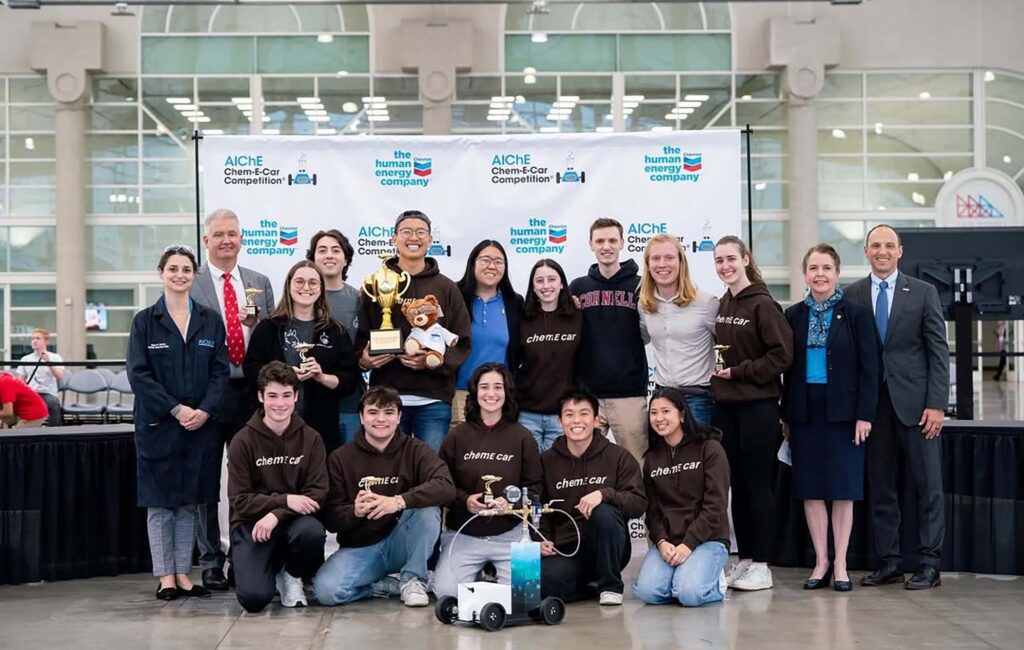
So, what exactly is a ChemE Car? Imagine a shoebox-sized, built-from-scratch vehicle that is powered entirely by chemical reactions. The team competes twice a year: in the spring at the Eckhardt Northeast Student Regional Conference and in the fall at Nationals. To qualify for Nationals, teams must place in the top three at Regionals, competing routinely against elite schools such as Yale, McGill and Northeastern University. Cornell consistently makes it to Nationals and, after several consecutive second-place wins in recent years, the team finally broke their streak in 2025 by taking first place at the Regional Competition.
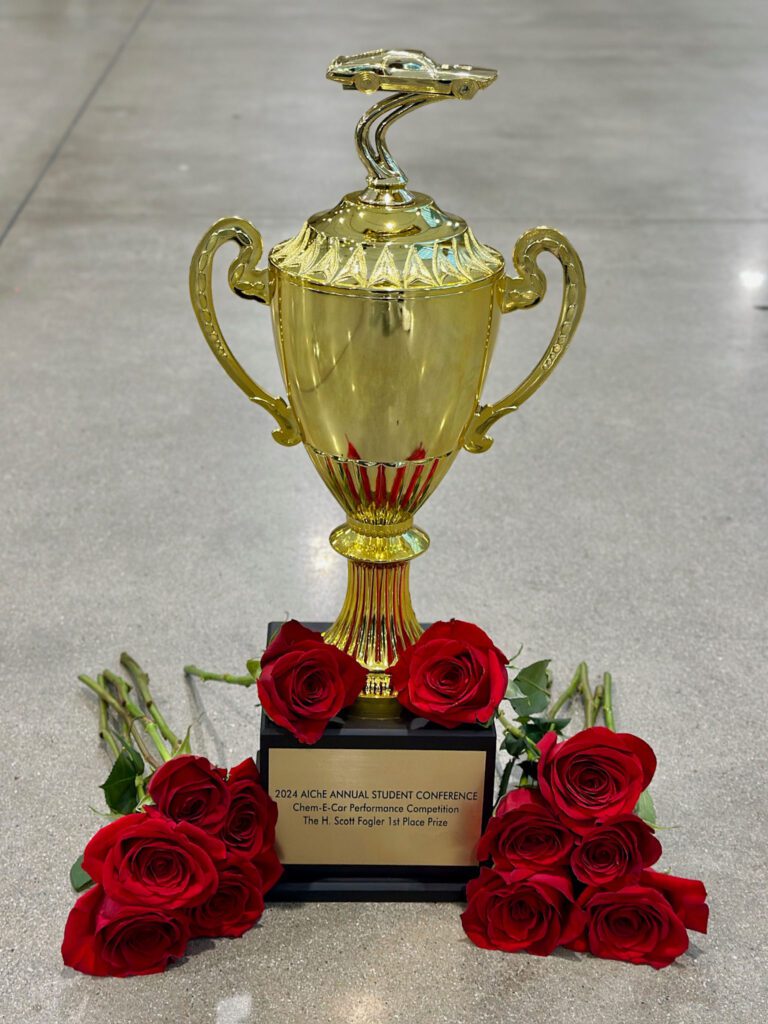
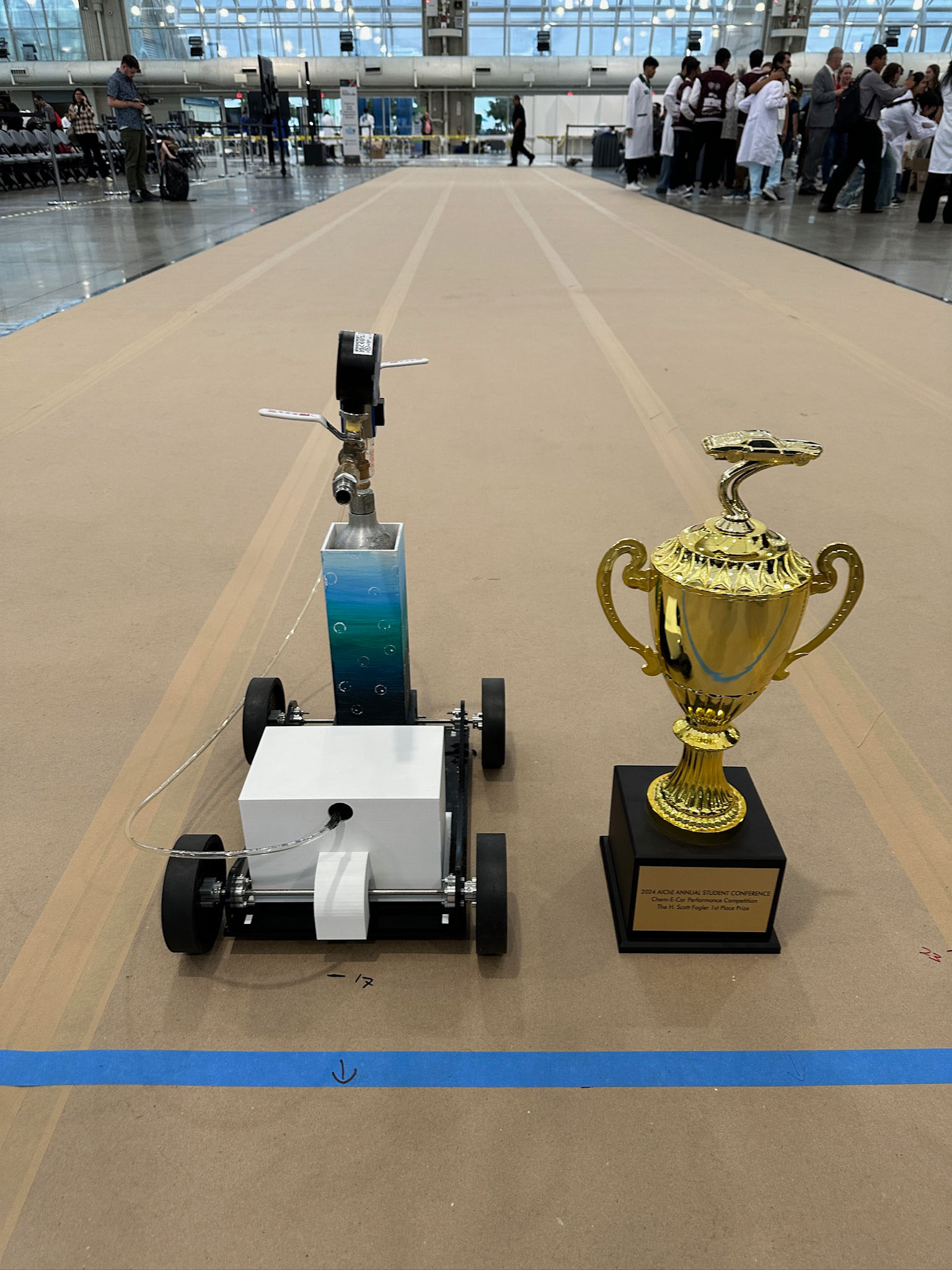
The National Competition has expanded dramatically since its founding in 1999. Originally exclusive to U.S.-based teams, the 2024 Nationals in San Diego, California, comprised teams from 24 countries. Cornell’s team earned first place—their first national title since 2015—that year, with a pressure car, aptly named “Under Pressure.” This victory was a powerful testament to the team’s legacy as the most-winning team in ChemE Car history and a reflection of the hard work that had been poured into the program.
The pandemic years: A story of resilience
The current generation of team leaders began their journey in 2021, a unique time shaped by the lingering effects of the COVID-19 pandemic. That fall, Cornell was transitioning out of quarantine. Masking was still required, in-person meetings had just resumed, and the team structure and leadership was being rebuilt. On the night before the National Competition in Boston, necessary chemicals didn’t arrive due to shipping delays, and the team improvised a memorable workaround by extracting a key chemical from the absorbent material in diapers, salvaging their competition run with creativity and calm under pressure.
That same academic year, the Regional Competition was held virtually due to ongoing COVID restrictions and presented new hurdles. Competing from the Olin Hall basement, the team realized hours before the event that they had overlooked a rule requiring a faculty advisor to be present. An early-morning scramble ensued, resulting in a solution—professor Abraham Stroock stepped in as faculty advisor—just hours before the event. Thankfully, these panic-pivot moments were balanced by long hours spent calibrating cars and collaborating on design improvements. One student recalled that the sheer intensity and teamwork required made them fall in love with ChemE Car and its hands-on, collaborative environment. Despite the unfamiliar format and challenges of competing online, the experience marked a turning point in team cohesion and individual growth. In the end, the team placed second behind the University of Toronto, whose near-perfect run became a benchmark for excellence.
A culture rebuilt through safety
In 2022, the team faced an even greater challenge when safety violations in the shared Unit Operations Lab came to light. Due to lapses in protocol following the pandemic and over a year of lab inactivity, the team’s access was suspended until they could demonstrate a renewed commitment to lab safety. After months refocusing and rebuilding trust with administration, appointing a dedicated safety lead, rewriting standard operating procedures and taking lab safety courses, the team rebuilt a culture where every team member became an advocate for safety. These practices laid a new foundation that continues to shape the team today.
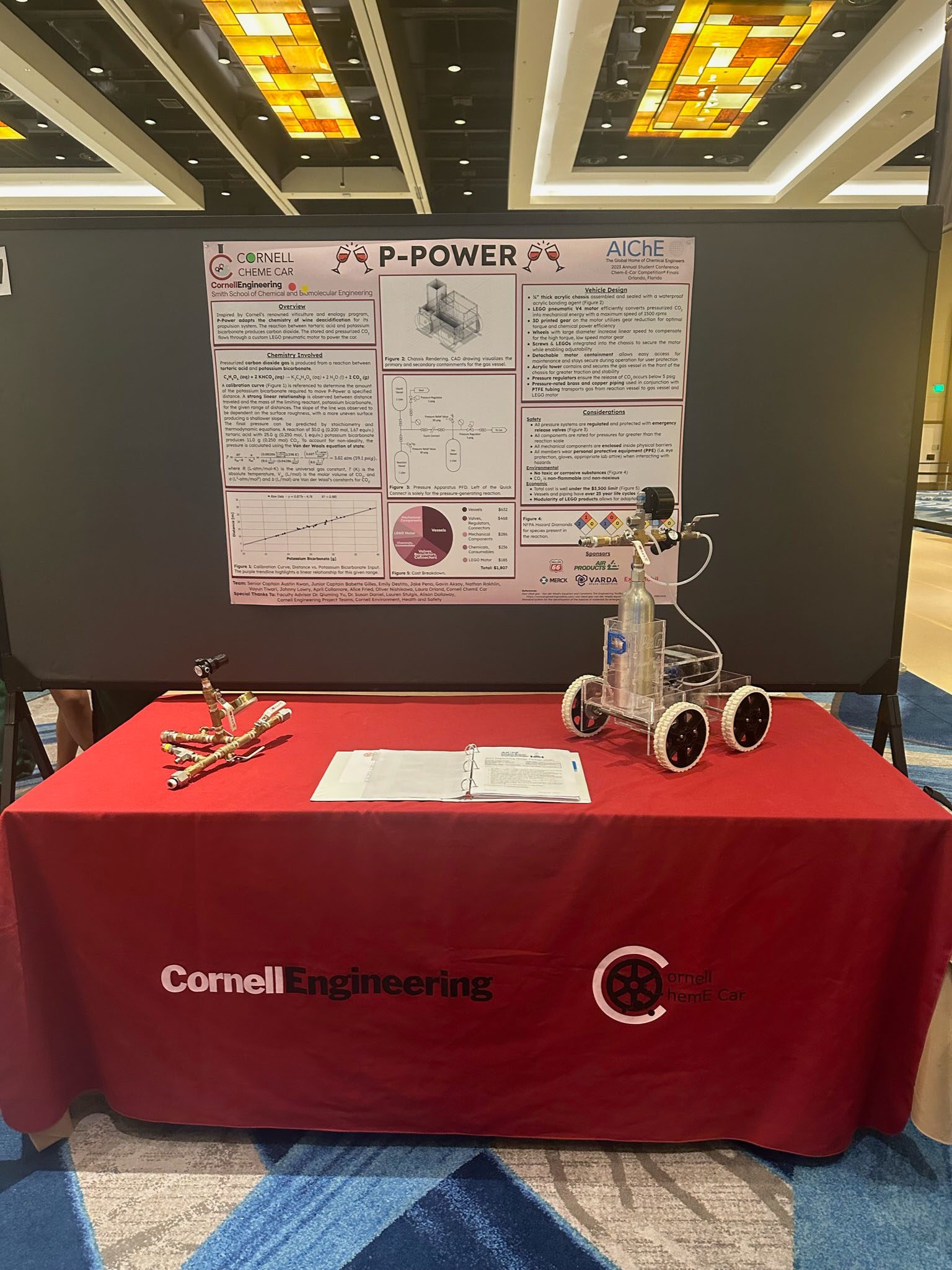
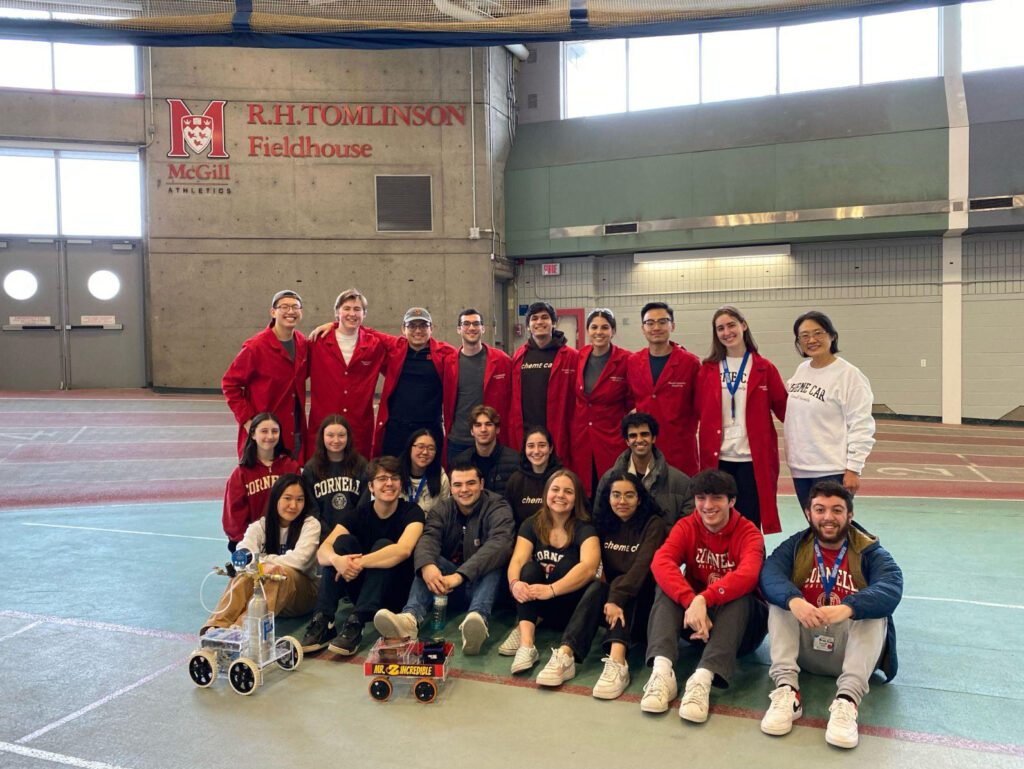
Part of the urgency behind the team’s rapid turnaround stemmed from an ambitious plan to bring two cars—a pressure car and a zinc-air battery car—to the 2023 Regionals. The team was finally permitted to reenter the lab just two weeks before the competition; at the time neither car’s chemistry was functioning. The team entered a period of intense collaboration and troubleshooting. In a remarkable feat, both cars were made fully operational and brought to McGill University for Regionals, where they competed against seven other cars. Despite unexpected challenges with the competition floor—specifically, a thin plastic tarp that disrupted the pressure car’s performance—the team secured second and fourth place finishes with the battery and pressure cars, respectively.
The following years brought other challenges, but the team’s revitalized safety culture and focus on collaboration positioned them for sustained success. After some shifts in team leadership, ChemE Car rebuilt relationships with department administration, strengthened internal bonds through frequent team socials, and reinvigorated its culture of peer mentorship and learning.
Comeback
Two years later, ChemE Car’s transformation is undeniable. The team is not only winning competitions, but also cultivating a spirit of enthusiasm and mutual respect that permeates every meeting and event. At club fairs and information sessions, team members light up as they share stories about their ChemE Car experience and community. Beyond the trophies, it’s these moments—the camaraderie, the growth, the problem-solving under pressure—that define one of the most successful teams in ChemE Car history. At its heart, ChemE Car at Cornell is about more than chemically powered vehicles. It’s about building a community of innovators, leaders, and collaborators who grow together through challenge, discovery and shared purpose.