Choose A Pathway
-
![image showing solar panels and wind turbines]()
Energy Systems
The Systems Engineering program and Cornell Energy Systems Institute offer an energy systems pathway in the M.Eng. degree, addressing the world’s growing energy needs and the challenges of climate change.
-
![Futuristic image of data graphics and a transparent human body]()
Health Systems Engineering
By merging systems engineering and healthcare, we prepare students to excel at this intersection through a transdisciplinary program. Students gain a deep understanding of healthcare systems, a strong engineering foundation, and hands-on clinical experience.
-
![A pointed tool is poised above a chip on a circuit board.]()
Semiconductor Manufacturing Industrial (SEMI) Engineering M.Eng. Pathway
As the worldwide need for efficient, resilient manufacturing systems is growing rapidly, so is the demand for skilled engineers to develop these systems. The Cornell Systems Engineering program has developed the Semiconductor, Manufacturing, and Industrial Engineering (SEMI) pathway to meet this need.



Design Your Own Pathway
Work with your academic advisor to create a program that meets degree requirements and supports your goals. Combine systems engineering coursework with electives in various fields to create your own custom two-semester M.Eng. pathway in a field that’s right for you. Below is a list of past pathways that students have designed. All but the last four are available to either on-campus or distance-learning students.
-
Chemical Systems
Control Systems
Data Analytic Systems
Digital Engineering
Embedded & IoT Systems -
Environmental Systems
Financial Systems
Industrial Operations & Logistics
Mechatronic & Robotics Systems
Product Design -
Project Leadership & Management
Service Systems
Software ML & AI Systems
Systems Engineering Analysis and Modeling -
On-Campus Only Pathways
Agriculture Systems
Biological Systems
Biomedical Systems
Business & Entrepreneurship
The M.Eng. Program
-
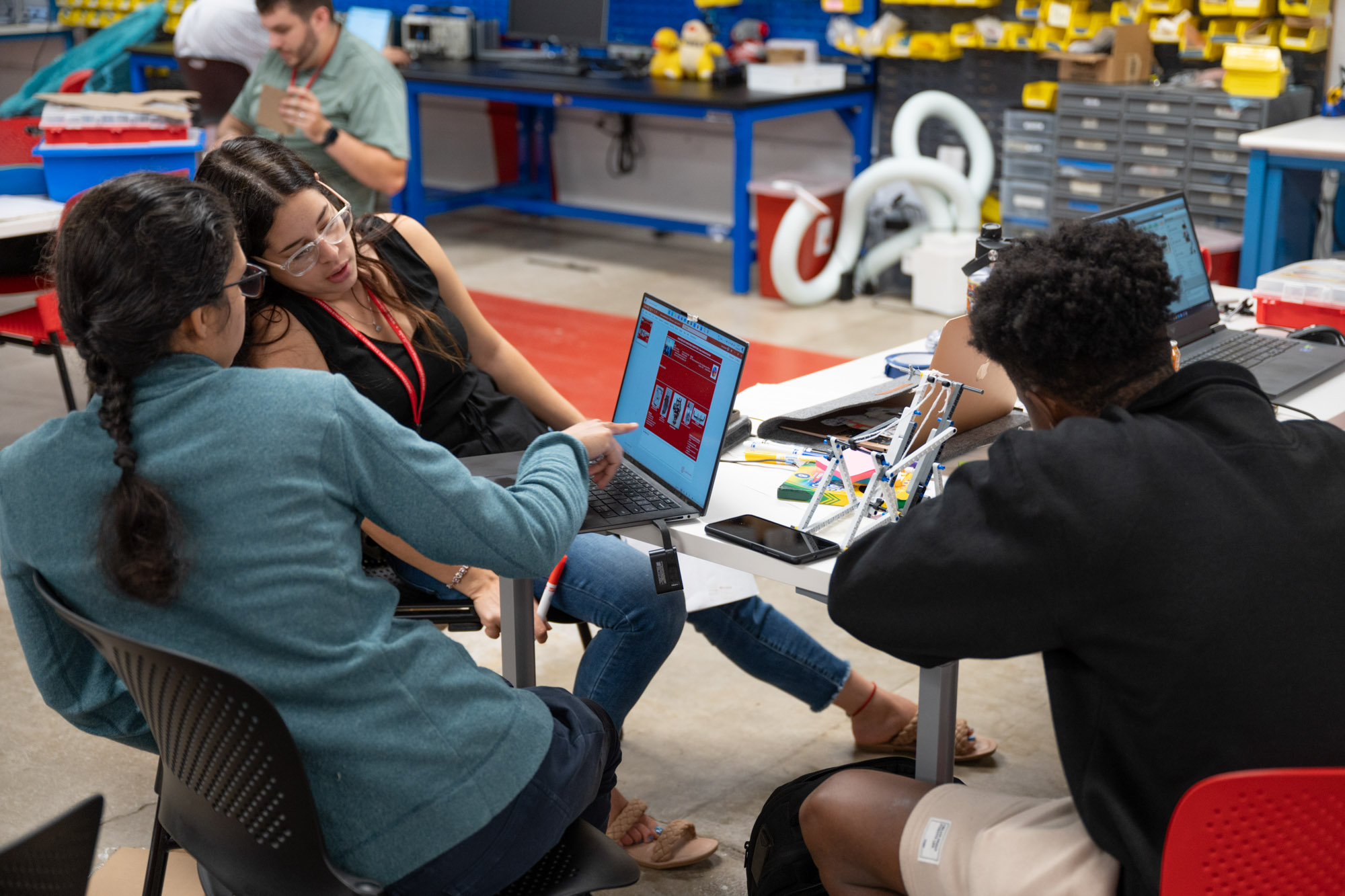
![Three distance learning students work at their laptops in the Carpenter Lab during SYSEN 5920]()
On Campus M.Eng. Program
The M.Eng. On-Campus degree is a full-time program that is completed in one year (fall and spring semester).
-
![Lecturer Sirietta Simoncini answers a question from a SYSEN 5940 student while other students work on their projects]()
Distance Learning M.Eng. Program
The M.Eng. Distance-Learning degree is a part time program that is completed in 1.5 to 2 years, or more.