Program Structure and Objectives
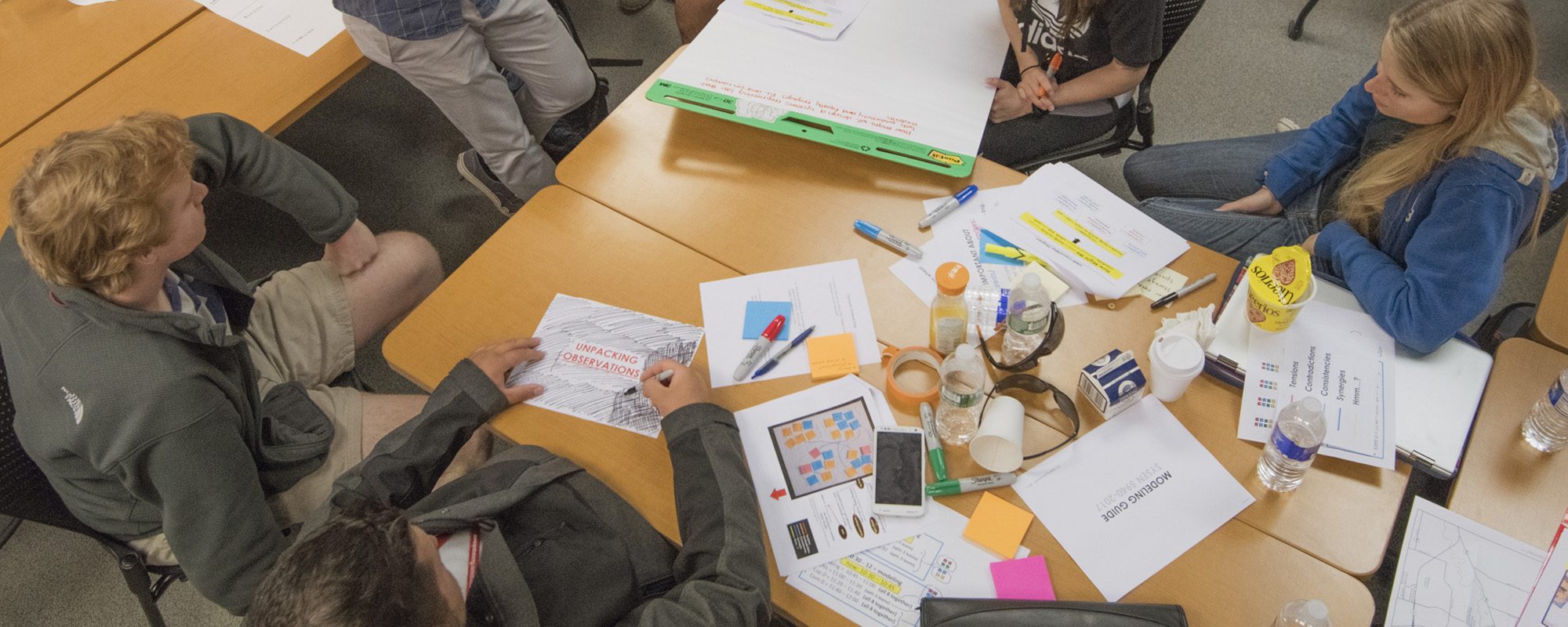
Systems studio is a dynamic, interdisciplinary platform that enables systems engineering students to engage in hands-on projects that bridge the gap between academic learning and real-world application. The program emphasizes collaborative projects among students, corporations, government agencies, academic institutions, and other partners by combining theoretical knowledge with practical experience to tackle complex societal systems, such as global competition, technological advancements, regulatory challenges, cyber threats, and supply chain logistics.
Key Components
Building on faculty expertise and student innovation, Systems Studio advances the field of systems engineering through cutting-edge research and development. The program encourages the exploration of new methodologies, tools, and technologies to address the challenges of modern complex systems.
-
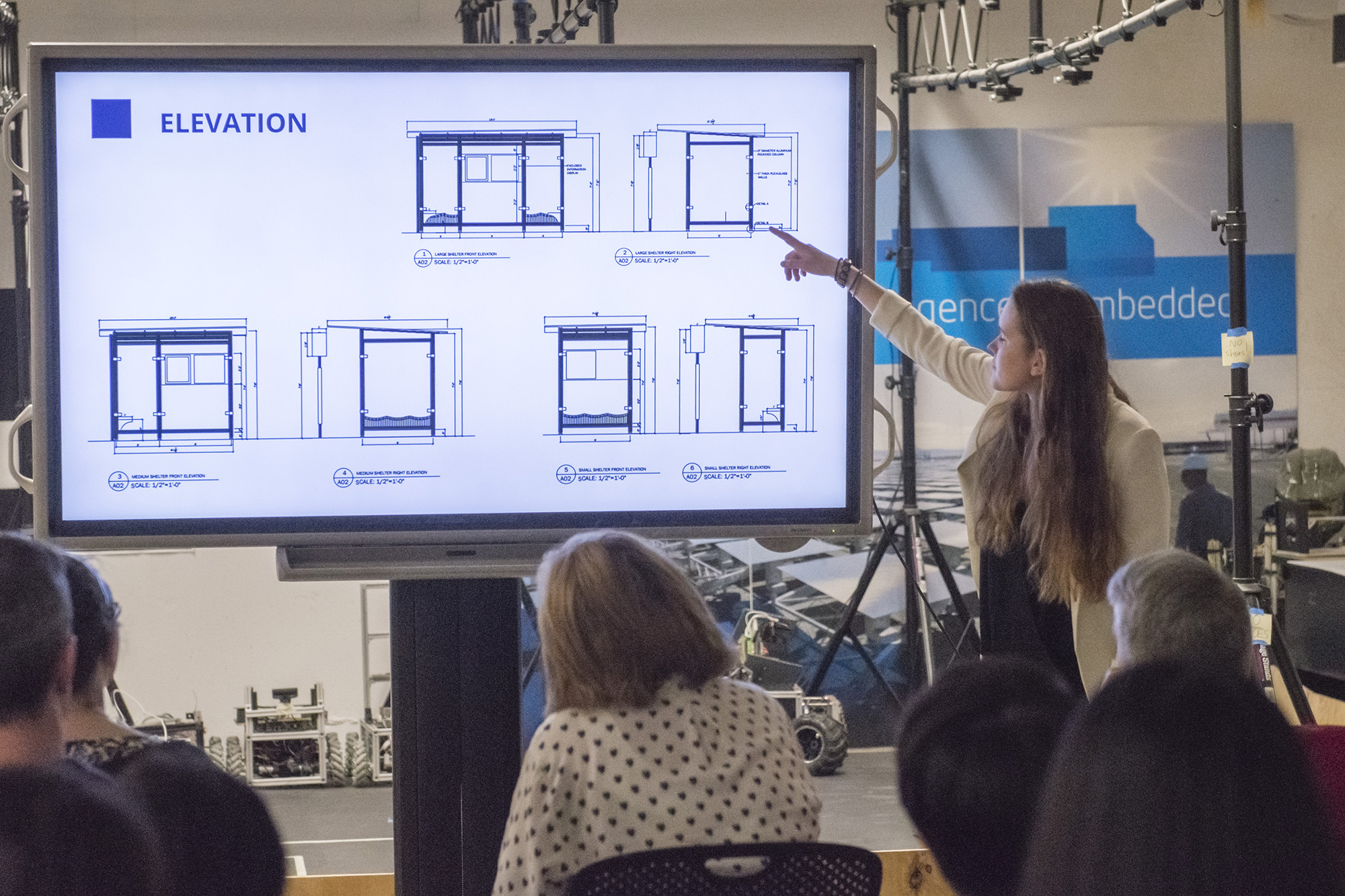
![Woman standing in front of a screen, presenting to an audience.]()
External Engagement, Collaboration, and Application
Systems Studio operates as an open laboratory, designed to serve as a bridge between the academic environment and the outside world. Through our program, Systems Engineering students share their progress, solutions, and ideas with each other and also with potential investors, consultees and trainees, fellow academics, and other interested groups and individuals. Our Systems Studio is designed to provide multi-directional communication between partners, enabling productive sharing of information and development of new ideas.
-
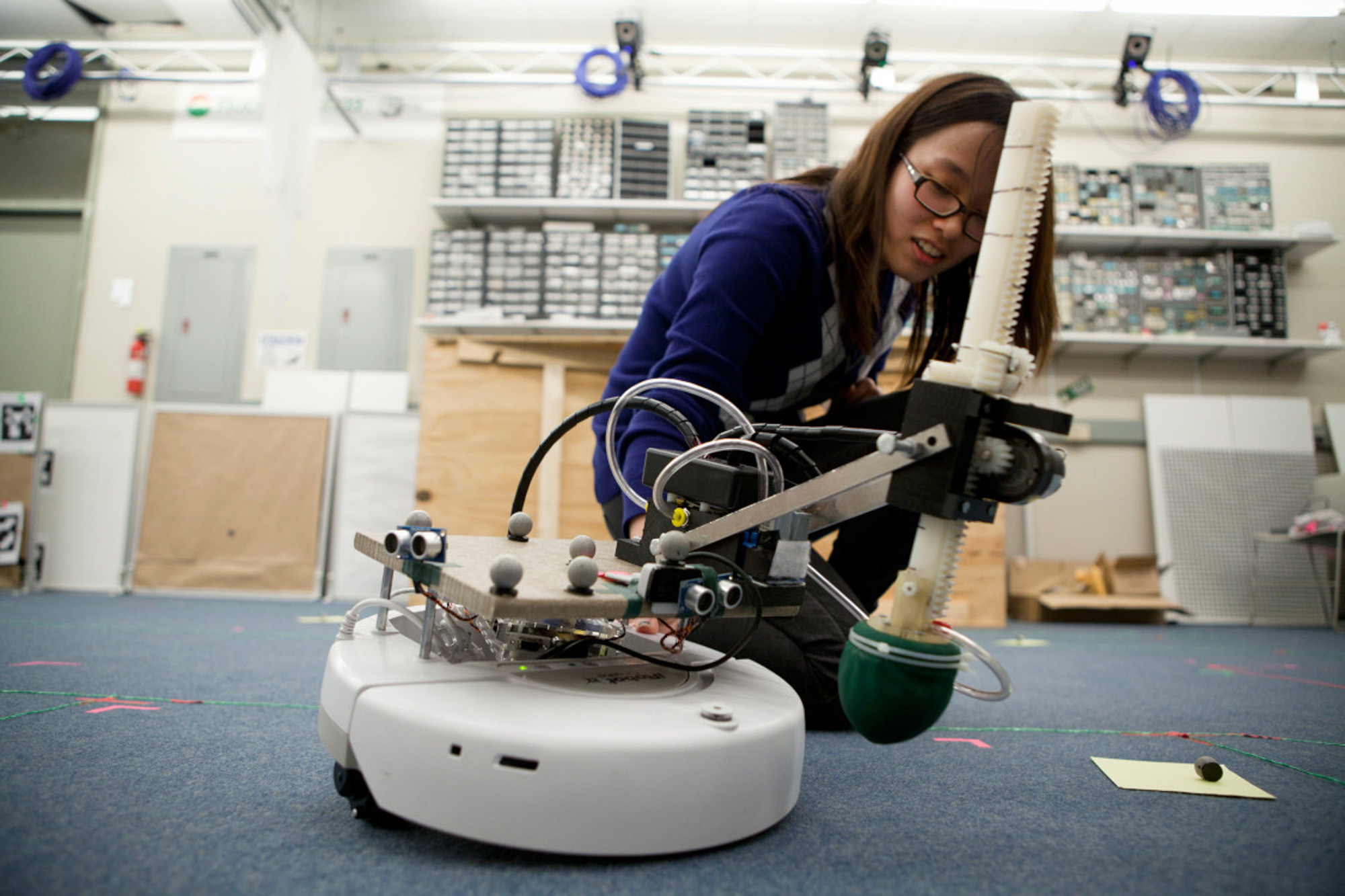
![Student demonstrated robotics project in Autonomous Systems Lab.]()
M. Eng. Projects
Our Master of Engineering (M.Eng.) projects are the heart of the Systems Studio. Our students are working on projects throughout Cornell that both provide hands-on learning and solve real-world problems. Some of these projects are faculty-initiated, and some are sponsored by industry. The Systems Studio provides an environment for all Systems-related M.Eng. project participants to share their progress and outcomes, identify opportunities for further development, and application, as well as explore concepts and generate support for new projects.
Sample M.Eng. Projects
-
SMARAG — AI-based Carbon Reporting Platform
Students: Praneet Pabolu, Jialiang Yuan, Yanny Zhu, Runbin Chen, Grant Zhao
Advisors: Dr. Xinlai Liu, Prof. H. Oliver GaoProject description: Self-decisive Multi-Agentic Retrieval Augmented Generation (SMARAG) is an AI-enhanced carbon reporting approach. By combining retrieval-augmented methods with self-decisive multi-agent coordination, SMARAG significantly improves the comprehensiveness, reliability, and transparency of carbon reporting processes, and shortens the report generation circle from months to minutes. This novel approach empowers the resource-constrained small and medium-sized enterprises for climate governance and offers valuable insights for policymakers and practitioners committed to other sustainability disclosures.
-
Blockchain-Based Carbon Market
Students:: Matthew Wang, Yichen Yao, Yijie Shi
Advisors: Dr. Xinlai Liu, Prof. H. Oliver GaoProject description: The voluntary carbon market is essential for businesses and individuals aiming to reduce their carbon footprints but faces challenges like inefficiency, transparency concerns, and double counting. This research proposes a blockchain-based carbon credit trading platform utilizing a double auction mechanism and tokenization, enhancing transparency, eliminating intermediaries, and autonomously executing trades through smart contracts. Simulations reveal that this approach fosters sustainable and credible carbon markets, offering valuable insights into optimal token pricing strategies and potential applications beyond carbon credit trading.
For more information on how to collaborate with Systems Studio, contact us at systemseng@cornell.edu.