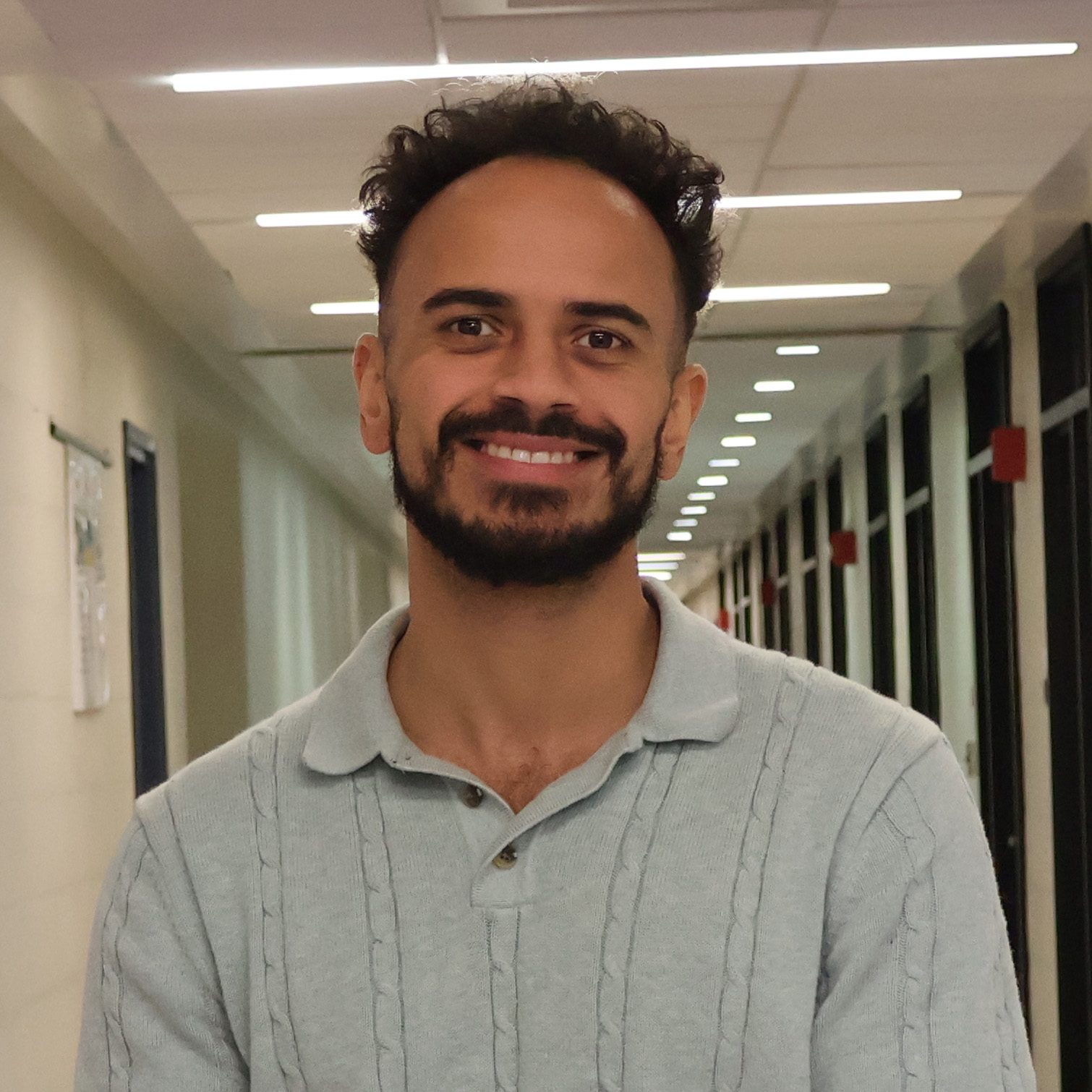
Jeremiah James
-
Program
Ph.D. in biomedical engineering
-
Hometown
Tampa, Florida
-
Research Area
Nonspherical polymer particle synthesis.
-
Faculty Lab Affiliation
-
Preferred pronouns
he/him
-
More
What’s your story?
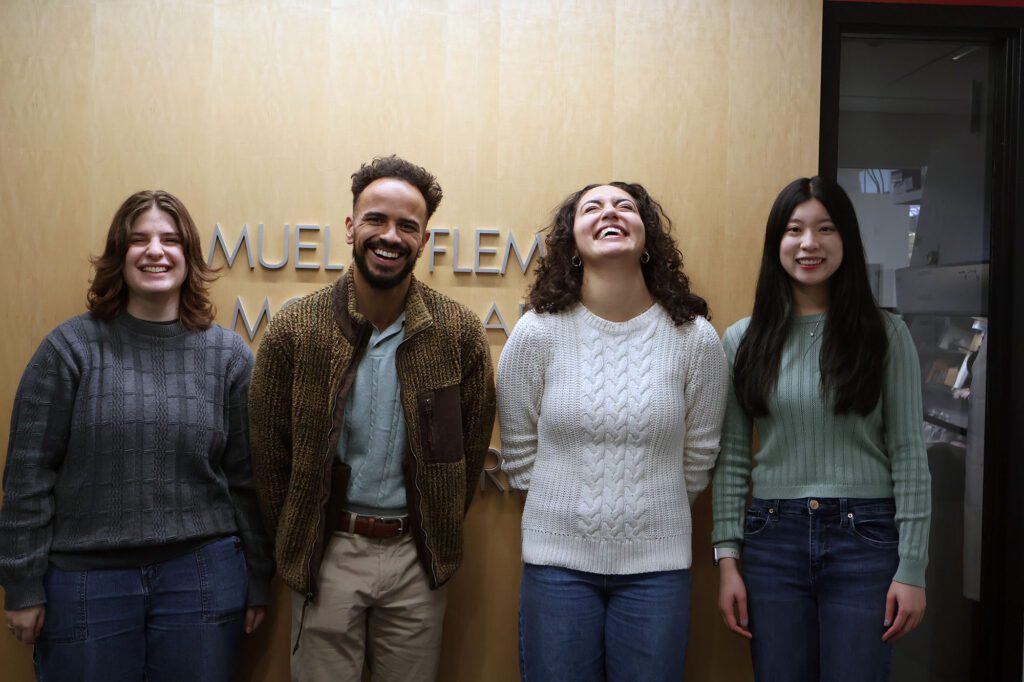
I was born in Queens, NY, and raised in Tampa, FL. As a kid, I always loved reading articles showcasing technology inspired by nature. Being raised in a highly religious household, the future that was expected of me was one of door-to-door evangelism. When I turned eighteen, I decided I wanted a different path, one where I could contribute to those engineering feats I read about as a child. I decided to pursue community college and, after receiving my associate’s degree, I began at East Carolina University. There, I wanted to get more involved; I served as a tutor for every core engineering course in the curriculum, a teaching assistant, and began my research on the mechanics of hydrogels, a material that parallels tissues-like cartilage. My advisor encouraged me to apply to the Cornell biomedical engineering program. I thought ‘No way, not me,’ but then the acceptance letter came. Four years and three months later, I received my Ph.D., and I am beyond excited for what comes next.
What is your area of research and why is it important?
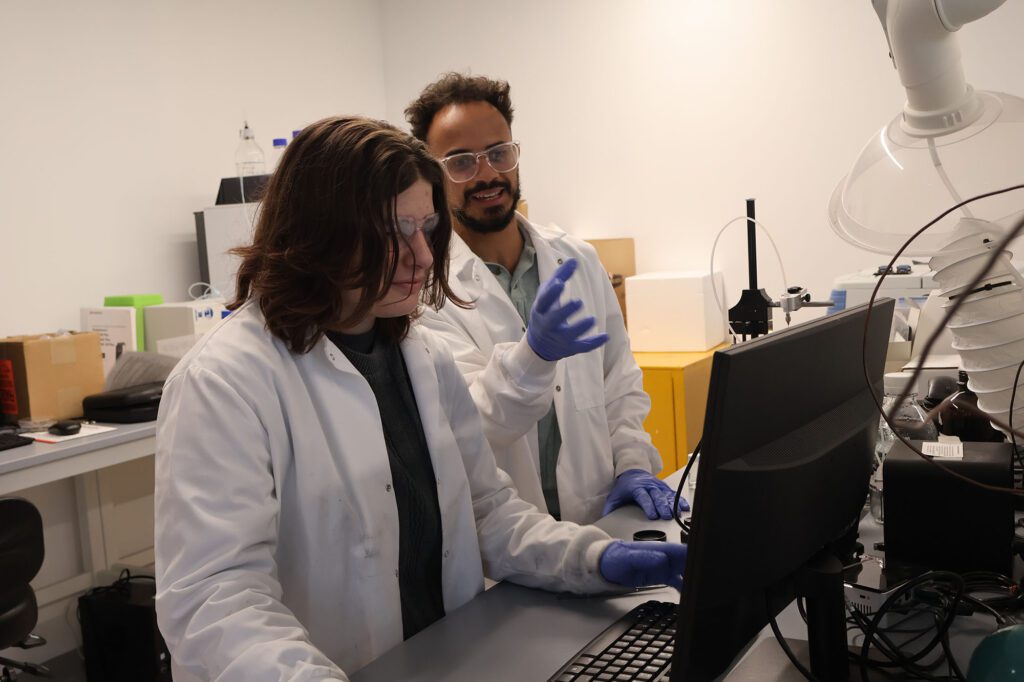
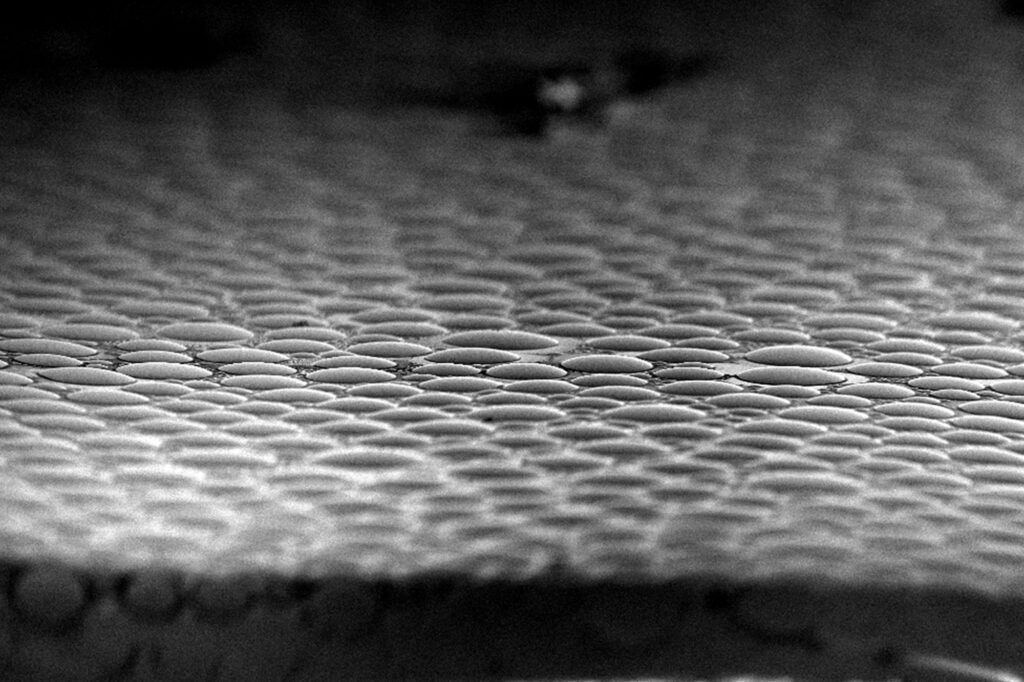
I study a new way to make polymer particles that aren’t perfectly spherical—shapes like domes and discs—using a technique our lab invented called condensed droplet polymerization (CDP). For almost 100 years, industries have mostly been limited to spherical particles because older methods can’t easily make anything else. But new research shows that different particle shapes can change how materials flow, pack, or even behave in the body, opening the door to better performance in many applications.
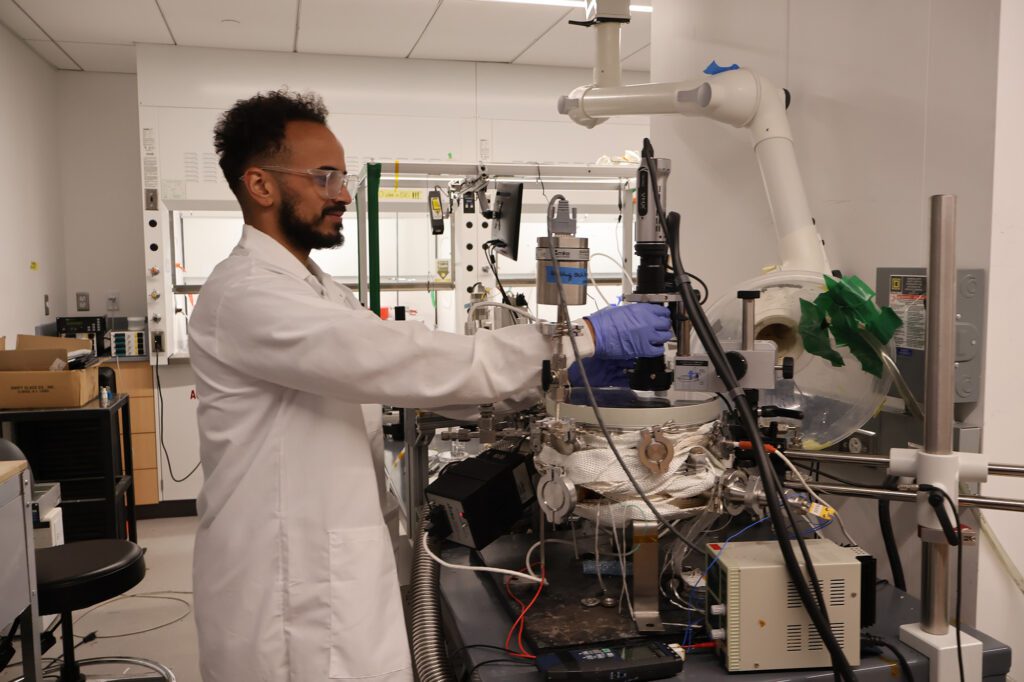
CDP is fast, simple, and inexpensive. It creates polymer nanoparticles in seconds to minutes, making it a strong candidate for large-scale manufacturing as the demand for these particles continues to grow. These nanoparticles have many uses: in medicine, they can deliver drugs more precisely—like targeting cancer treatments to tumors while protecting healthy tissue. Outside of healthcare, they can strengthen construction materials or help detect harmful pathogens.
The larger impact of this work is significant. Better drug delivery methods can improve patient outcomes and make treatments easier to follow. Stronger building materials can prevent failure and help structures last longer. And faster, more accurate pathogen detection can protect public health. You can find polymer particles in paper materials, paints, and even in the Burj Khalifa. Now the question is, can shape engineered polymer particles unlock further benefits? Our research is one of few techniques that has the potential to translate from bench top to industrial scale manufacturing of shape engineered, disk and dome shaped particles.
What’s your Cornell Ph.D. experience been like so far?
My Cornell Ph.D. experience has been a mix of growth, challenge, and unexpected lessons. Some of the most rewarding moments have come from mentoring—working closely with four undergraduates who each chose to stay in the lab for three years was incredibly fulfilling. I also loved serving as a teaching assistant for the eLab course in the SC Johnson College of Business, where I helped students think through how to turn their ideas into real companies.
There have also been some unexpected curveballs along my journey, and each one taught me something new. The biggest lesson I’ve learned is that whenever you point the finger outward, three point back at you. Taking time to slow down, reflect, and work on yourself makes all the difference. I remind myself that sunny days feel great, but you need the rainy ones to grow—so don’t shy away from them.
One thing that surprised me was realizing that graduate students don’t receive a 401(k), even though many of us are nearly 30 by the time we finish and are expected to devote ourselves fully to work that benefits our advisors’ labs. It’s a system that feels a lot like employment without the long-term financial support. A 401(k) would go a long way.
During my time at Cornell, I’m also proud to have won a Provost Diversity Fellowship, a National Science Foundation Graduate Research Fellowship (NSF GRFP) and the Dean Collins Fellowship. These awards fully funded My Ph.D. start to finish, which enabled me to focus on my interests.
What do you do for fun outside your academic/research experience?
Outside my research, I like to hang out with my mentors, friends, and family. I have a small real estate company, Adaptive Rentals, and I hope to continue to grow it and take on more ambitious renovation projects. I also spent the last three years taking courses in Chinese at Cornell. I’m proud to read, write, and speak at an intermediate level, halfway there, why is learning Chinese so hard?!
What’s next for you?
Focus on living life, traveling, learning, eating, meeting new people, and starting a family one day. Experiencing life beyond work, I mean; AI is coming for all our jobs anyway. I think we should all rewatch Wall-E and make sure we don’t make the same mistakes. Until then, I would like to have a job I enjoy and pays me well.
Any advice for other students considering research in biomedical engineering?
Remember, your time is your gold.
Favorite Cornell memory?
A night that started at the Big Red Barn, sunset at the Slope, popping into Collegetown Bagels, and ended at The Westy.
Anything else you’d like to share?
Stop stressing, take care of yourself, you can change anything in your life.