M.Eng. student Maddie Slavett blends mechanical engineering, clinical insight, and human-centered design at Cornell to develop realistic anatomical training models that aim to improve surgical education and patient care.

Madeleine (Maddie) Slavett
-
Program
M.Eng. in biomedical engineering
-
Hometown
Saratoga Springs, New York
-
M.Eng. Project
A realistic, reusable uterus model
-
Preferred pronouns
she/her/hers
-
More
What’s your story?
Growing up, I always wanted to understand how things worked. I loved math and science so when I was eight, I went to a STEM Girls event and met some biomedical engineering students who explained how biomedical engineers can change lives. That moment stuck with me, and it shaped the direction I’ve followed ever since.
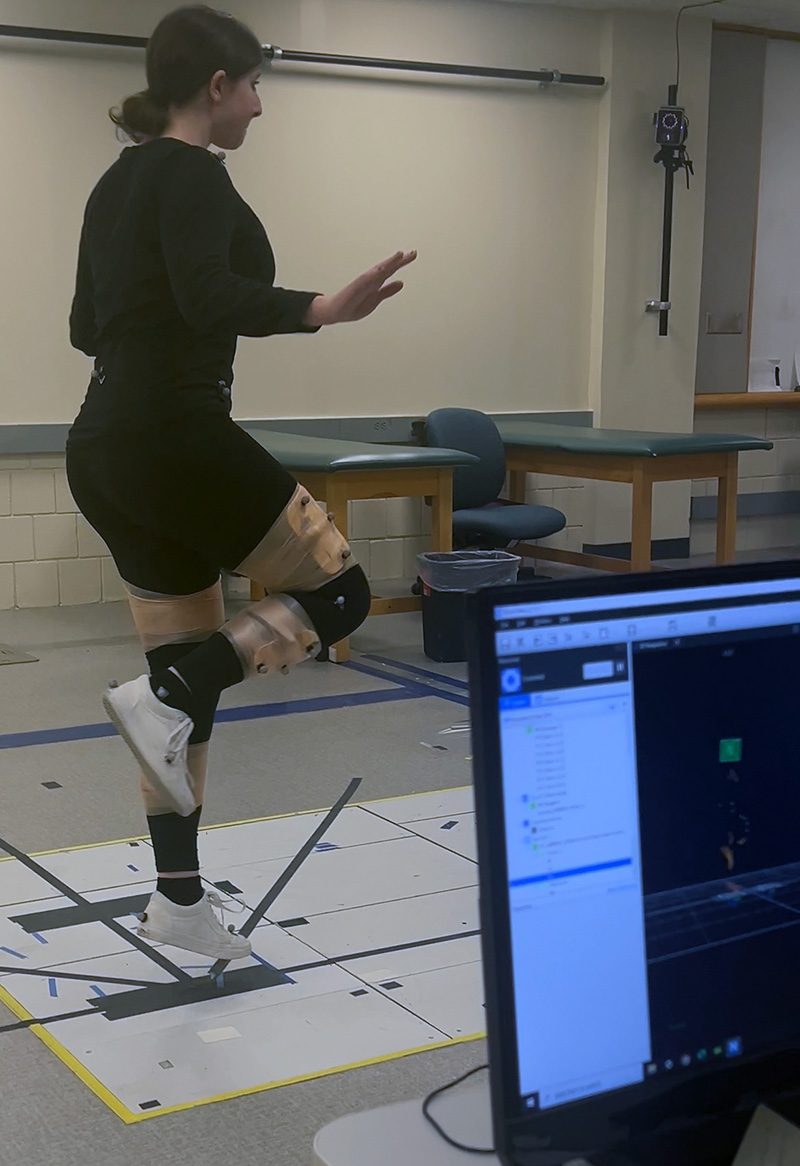
At Cornell, I initially started my bachelor’s degree in biomedical engineering but discovered that I was most energized by the mechanical and macro-level aspects of human motion and assistive devices. That led me to switch into mechanical engineering for my undergraduate degree, while keeping my focus on medical devices. Pursuing the master of engineering (M.Eng.) in biomedical engineering felt like a natural next step to deepen that skill set and work at the intersection of engineering, healthcare, and patient-centered design.
Describe your M.Eng. Project and why it’s important.
My M.Eng. project focuses on designing a realistic, reusable uterus model specifically for training clinicians in the removal of fibroids, which are common, noncancerous (benign) growths of muscle and connective tissue that form in or around the uterus. Many existing models are too simple or don’t accurately mimic the mechanical behavior of uterine tissue and fibroids, which makes it difficult for trainees to practice essential skills like manipulating instruments or identifying fibroids and safely excising them. As a result, clinicians often learn these techniques for the first time on actual patients.
Our goal is to create a model that reproduces the texture, structure, and resistance of real tissue so medical students and residents can practice fibroid removal techniques in a safe, controlled environment before performing them on patients. By improving the realism and functionality of training tools, this project aims to help clinicians develop stronger surgical skills, reduce patient risk, and enhance the overall quality of gynecological care.
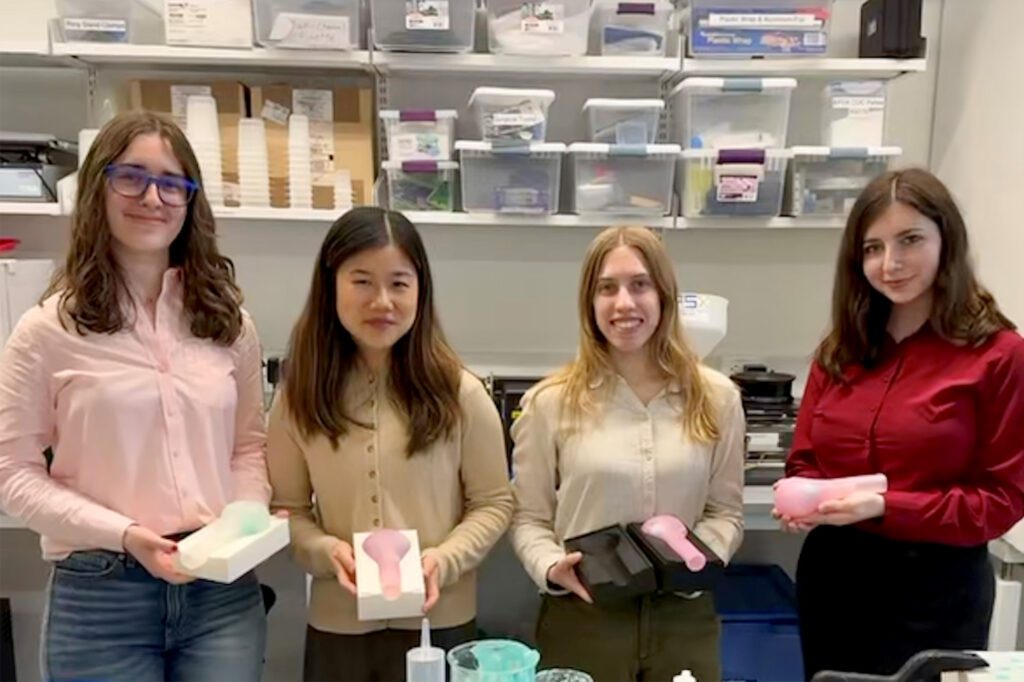
What’s been the most rewarding part of your M.Eng. experience so far
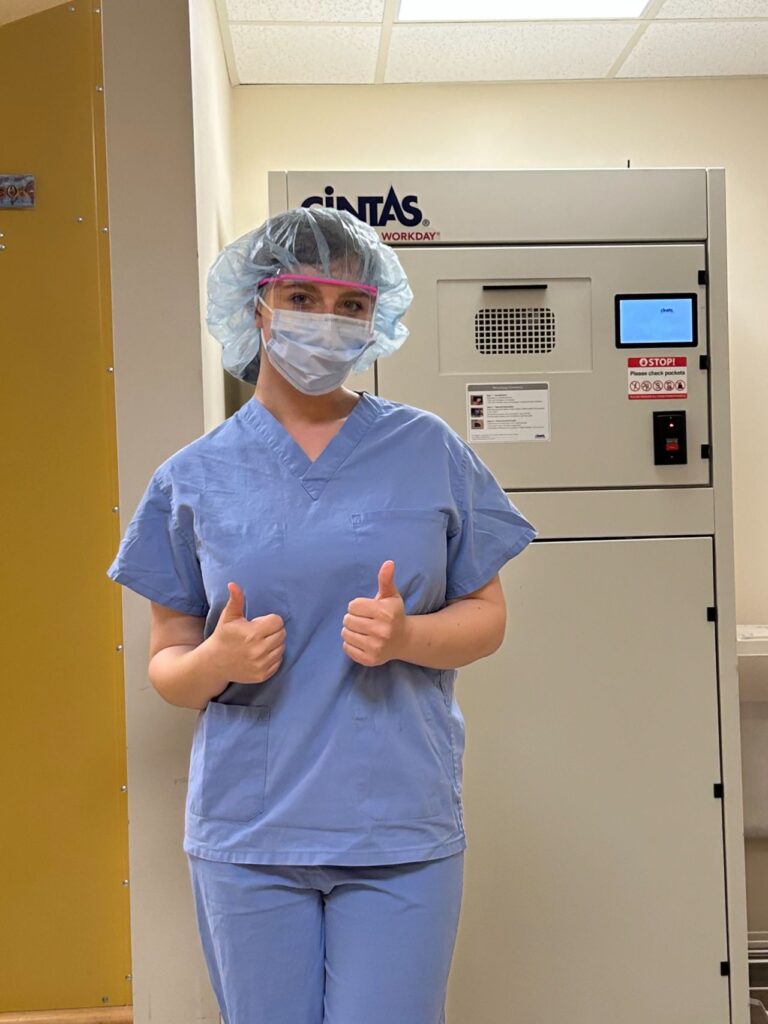
The biomedical engineering clinical preceptorship course, BME 5100, at Guthrie Hospital in
Sayre, Pennsylvania has been the highlight of my time so far because I was able to go into an operating room and see orthopedic decision-making in action. This experience reinforced why I love the field. Watching surgeons evaluate implants, tools, and constraints in real time deepened my understanding of how engineering integrates with clinical needs, and it also made the connection between biomechanics and patient outcomes feel very real.
What’s next for you?
After I graduate in fall 2025, I will be working in the medical device industry at Arthrex, specifically on the 3DAnatomy team. I’m incredibly excited for this role because it aligns directly with the work I’ve been doing in my M.Eng. design project, creating realistic anatomical models that improve clinical training and deepen understanding of human tissue behavior.
Longer term, I hope to deepen my expertise in orthopedics while continuing to explore related areas like prosthetics, women’s health, and haptics. I’m driven by roles where engineering, anatomy, and human-centered design intersect, whether that means designing better training tools, enhancing mobility-focused devices, or creating more inclusive medical technologies.
Ultimately, my goal is to contribute to medical innovations that are not just technically strong but truly improve people’s lives. I’m excited to keep learning, collaborating across disciplines, and applying what I’ve built at Cornell to meaningful work in the industry.
Any advice for future students?
Don’t underestimate how much you can learn from the people around you. Some of the most valuable insights I’ve gained have come from conversations with peers, mentors, and especially Cornell alumni. Reaching out to alumni is one of the best ways to understand the realities of the medical device industry, like the kinds of roles that exist, what day-to-day work actually looks like, and the skills that matter most.
Classes give you the foundation, but talking with people who are already in the field fills in the gaps in a way nothing else can. My biggest advice is to be curious, ask questions, and take advantage of how willing Cornell alums are to help. It can completely change your sense of direction and confidence in pursuing your path.
Favorite Cornell Memory?
One of my favorite Cornell memories comes from living in Redbud Cooperative. There’s something really special about being part of a community where people cook together, support one another, and create a space that feels like home in the middle of a busy semester. Some of my best moments were the simple ones, like eating dinner together after long days, chatting in the kitchen while people made baked goods or experimented with new recipes, or hosting little house traditions that brought everyone closer.
Redbud gave me a sense of belonging that’s hard to put into words. It was the first place on campus where I truly felt part of a community built on mutual care, shared responsibility, and genuine connection. The friendships I made there, and the feeling of being part of something collaborative and welcoming, are things I’ll always remember.
Anything else you’d like to share?
I’m incredibly grateful for the faculty, mentors, and peers who have supported me along the way. This program has helped me better understand the kind of engineer I want to be: curious, creative, adaptable, empathetic, and committed to improving people’s mobility.