Shaping the Future of Technology
Electrical and computer engineering extends from the nanoscale level of integrated electronics to gigantic power grids; from single-transistor devices to networks comprising a billion nodes. Our students discover and apply new technologies and innovations in our three nationally-ranked academic degree programs.
Our Programs
- Minor
- B.S.
- M.Eng.On Campus
- M.Eng.Distance Learning
- M.S.
- Ph.D.
-
Electrical and Computer Engineering
Focuses on developing electrical systems, from circuits to computers. Great for those interested in hardware, software, and advancing technology.
Strategic Areas of Research
-
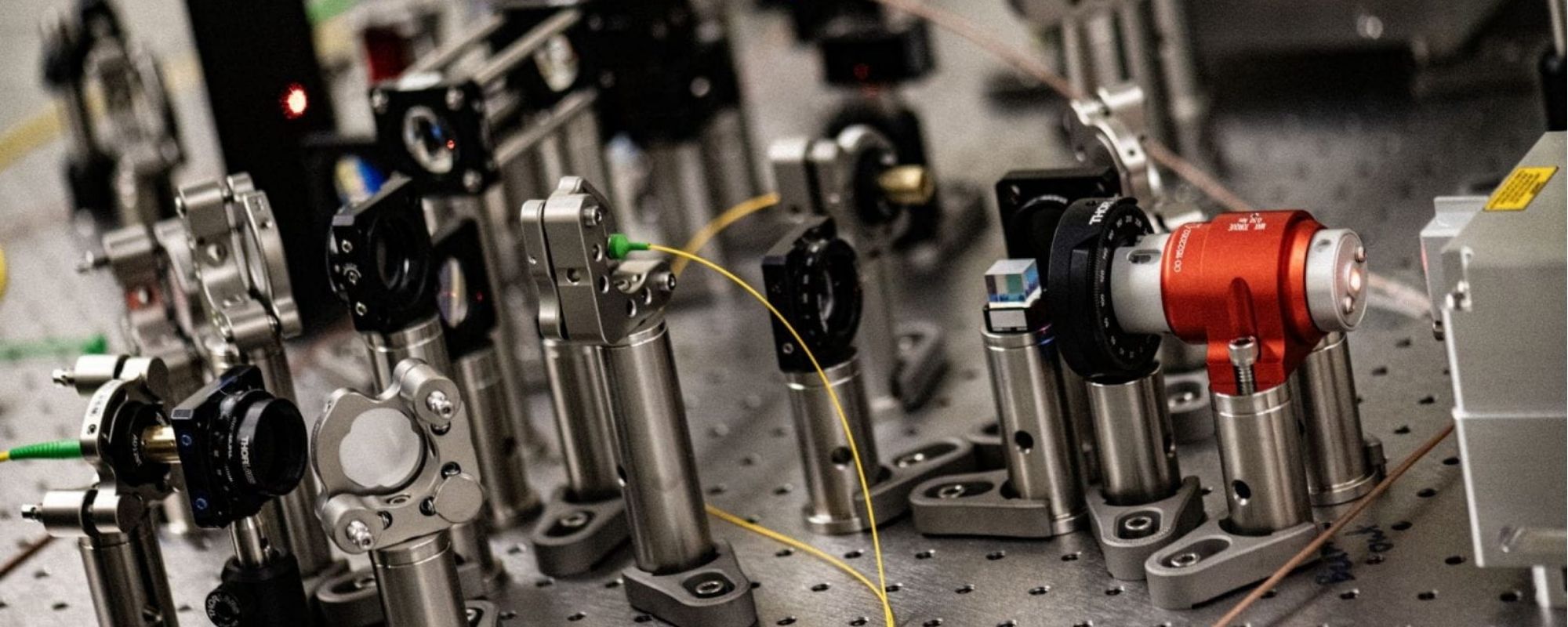
![Karan Mehta's Photonics and Quantum Electronics Group lab equipment]()
Bio-Electrical Engineering
Interfaces for sensing and actuation to help understand the physiological and pathological mechanisms of diseases, and enable advanced robotic interfaces in medicine.
-
![Circuit board]()
Circuits and Electronic Systems
Analog and mixed signal circuits, RF transceivers, low power interfaces, power electronics and wireless power transfer, and many others.
-
![Blockchain graphic from the Statistical Signal Processing Lab of Vikram Krishnamurthy]()
Computer Engineering
Digital logic and VLSI design, computer architecture and organization, embedded systems and Internet of things, virtualization and operating systems, code generation and optimization, computer networks and data centers, electronic design automation or robotics.
-
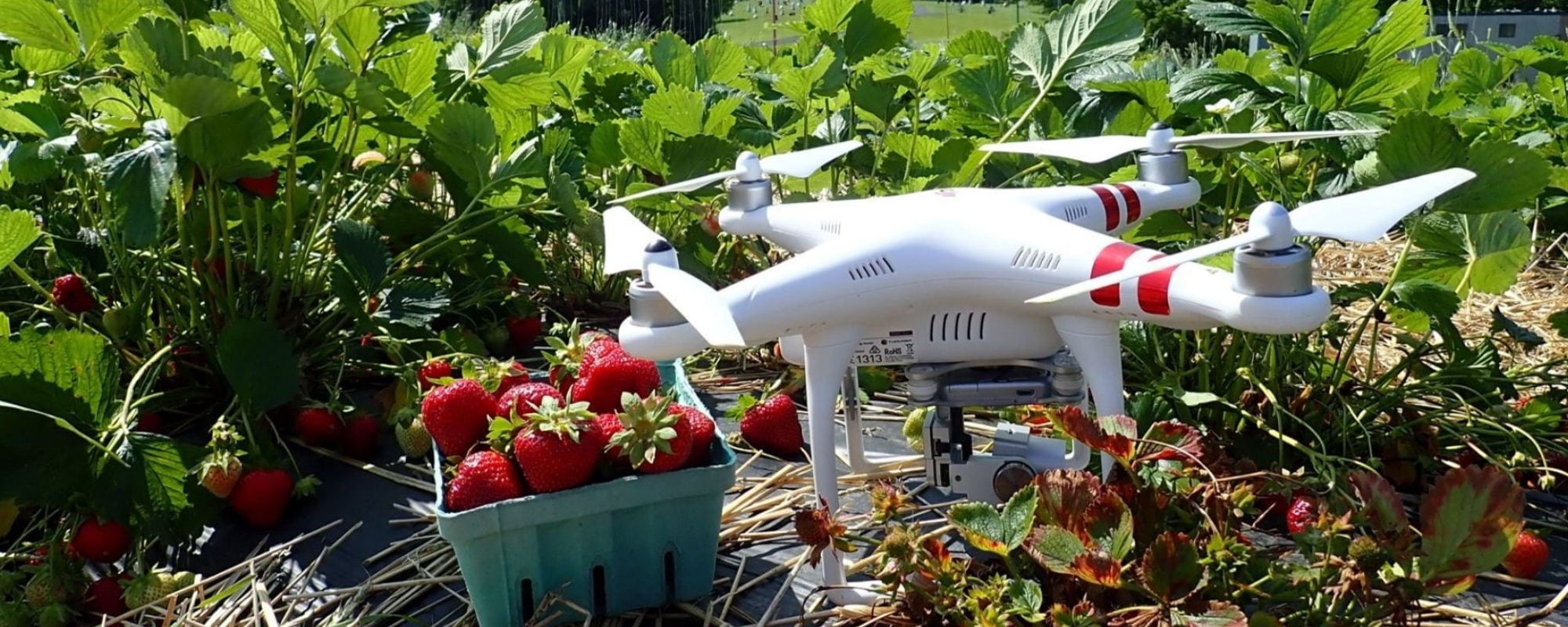
![A drone in a strawberry field working on pollination. in Kirsten Petersen's lab]()
Information, Networks, and Decision Systems
The advancement of research and education in the information, learning, network and decision sciences.
-
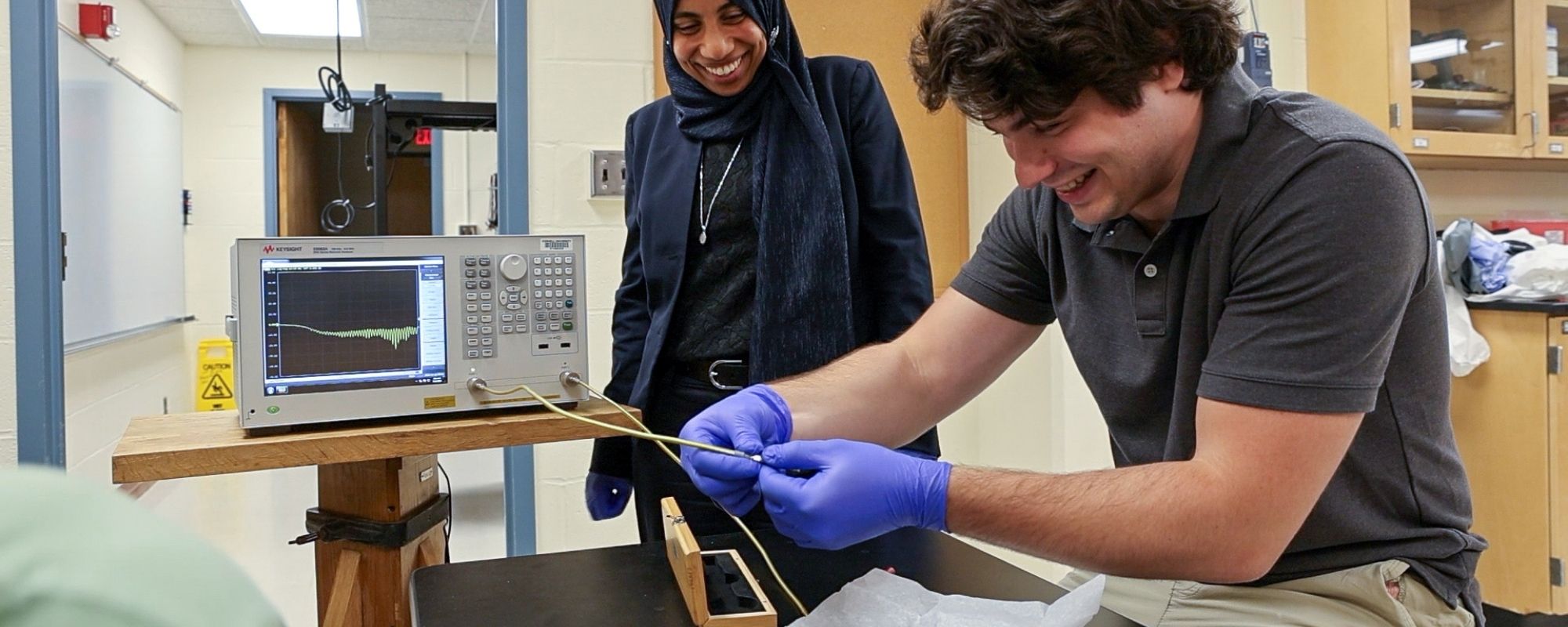
![Amal El-Ghazaly working with a student in her lab on magnetic sensors]()
Physical Electronics, Devices, and Plasma Science
Electronic and optical devices and materials, micro-electromechanical systems, acoustic and optical sensing and imaging, quantum control of individual atoms near absolute zero temperature, and experiments on high-energy plasmas at temperatures close to those at the center of the sun.
-
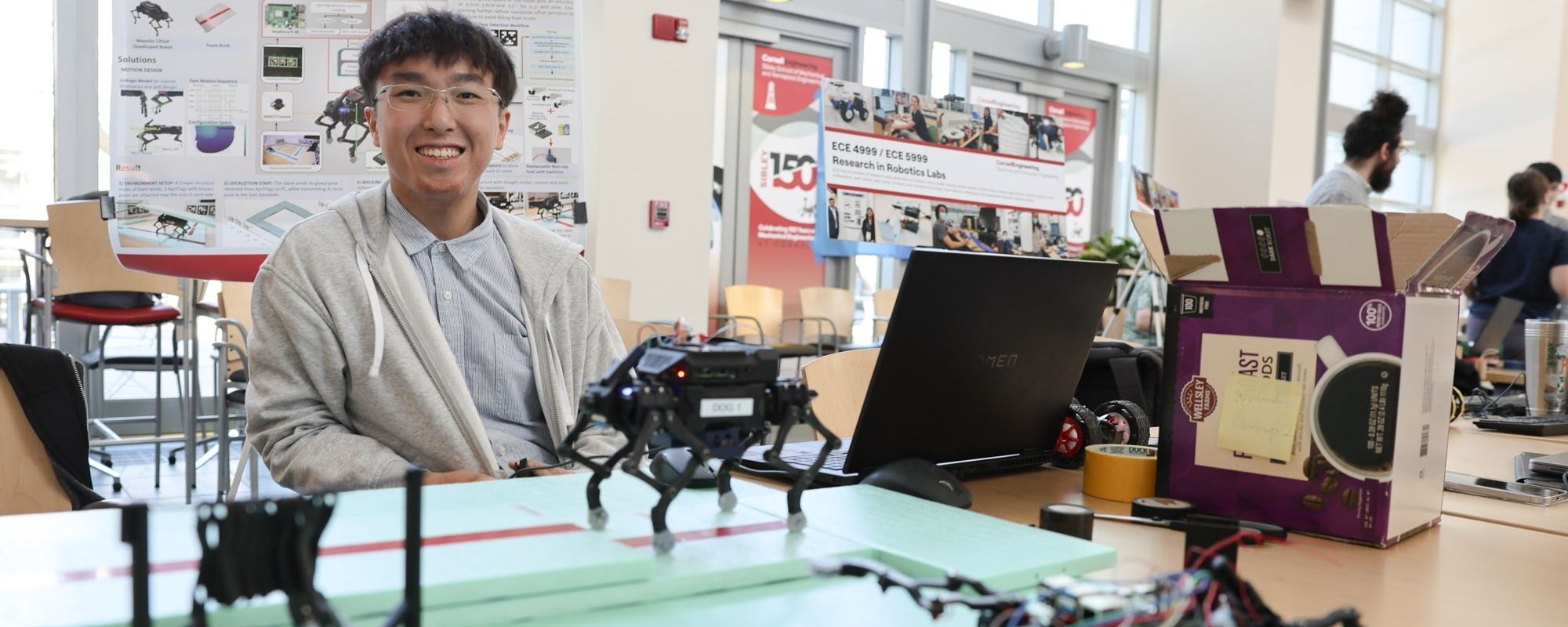
![Student showcasing their robot during the annual Electrical and Computer Engineering Robotics Showcase event]()
Robotics and Autonomy
Topics include swarm intelligence, embodied intelligence, autonomous construction, bio-cyber physical systems, human-swarm interaction, and soft robots.

News Highlights
-
![]()
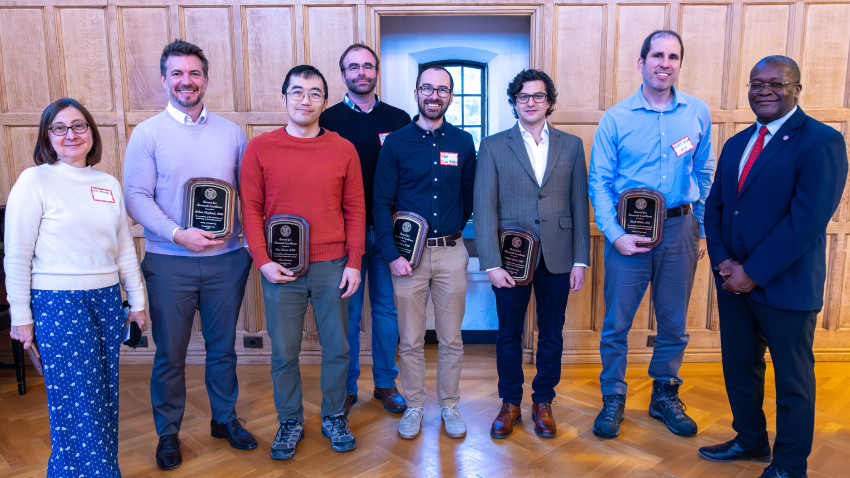
Robotics, exoplanets, quantum theory earn Research Excellence Awards
Revealing how psychiatric drugs reshape the brain and designing next-generation missions to find distant worlds are among the research themes that helped faculty earn Cornell Engineering Research Excellence Awards, the college’s highest recognition for groundbreaking scientific impact.
-
Martínez, Naaman named distinguished members of the Association for Computing Machinery
-
From greener AI to richer 3D worlds: 23 papers debuted at NeurIPS conference
Contributions unveiled tools for analyzing environmental and health interventions, matching images to architectural plans, and generating realistic 3D scenes with unprecedented efficiency.
-
Aluminum nitride transistor advances next-gen RF electronics
Cornell researchers have developed a new transistor architecture that could reshape how high-power wireless electronics are engineered, while also addressing supply chain vulnerabilities for a critical semiconductor material.
-
Grants to support research at nexus of AI, climate science
New grant funding will support eight research projects seeking to reduce AI’s energy use and integrate AI in environmental research.