Engineering and technical work has no force or presence unless it’s communicated well. The CUP Awards recognize undergraduate students who create powerful presentations about their engineering projects. Cornell Engineering and the Engineering Communications Program invites undergraduate individuals and teams to be considered for three separate awards for presentations. Winning students will earn both a monetary award and recognition.
CUP Awards Overview
-
Objective
These competitions all come with cash awards. The categories of awards listed below allowed for extraordinary students to be recognized for their high levels of presentation prowess, even in the most trying of years.
-
Cash Awards
The goal of the Engineering CUP Awards is to highlight undergraduate work within Cornell Engineering, showcasing the importance of strong communication for any technical endeavor. Presenters will benefit, too, from the training, advice, and guidance offered by training workshops and feedback.
-
Submission Process
The process for submission will be outlined with each award. The categories of awards listed on this page allowed for extraordinary students to be recognized for their high levels of presentation prowess.
-
The Roger K. Berman Oral Presentation Award
- For individual speakers.
- New topical theme each year.
-
The Douglas Whitney Prize for Engineering Student Presentations
For individual speakers or teams.
The Roger K. Berman Oral Presentation Award
Fall 2023: The Indispensable Condition
(use the above link to access the topic and the list of winners)
2019-2020 Winners
-
Presenter: Issah Madugu
Title: Engineering’s Role in Social Justice
Madugu presented compelling a thoughtful collection of reasons that engineering should be rooted in—and responsive to—social justice at its very core.
-
Presenter: Isabelle DiGiacomo
Title: LaTeX for Technical Communication
DiGiacomo expertly and confidently synthesized core aspects of LaTeX within a frame of technical and engineering communication workflows. This work will soon be featured on Cornell Help for Engineering Communication (CHEC)./head
History of the Roger K. Berman Oral Presentation Award
The Roger K. Berman Oral Presentation Award is given to one or more outstanding individual undergraduate speakers per academic school year. Student participants must be a declared majors in the College of Engineering at Cornell University. This competition is not available to MEng or PhD students.
With a new theme guiding submissions each year, presentation topics can be linked to a Cornell undergraduate engineering course or a Cornell Engineering Project Team. Students can also enter as an individual apart from coursework or formal university project teams.
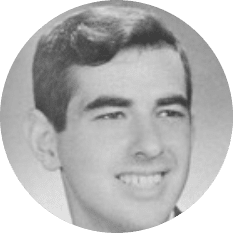
Roger K. Berman was a founding member of the advisory council for the Engineering Communications Program. He had a lifelong interest in effective communications, manifested in part during his student days at Cornell University when he served as editor of the Cornell Engineer. In his work at Bellcore, he saw how well communications skills served young engineers, and he believed that his participation on the communications council was one way in which he might help shape the education of students in the college.
In 1994, a fund was endowed in memory of Roger Berman, honoring his memory and his desire for engineers to succeed and excel. The prize will be awarded annually to a student enrolled in the Engineering Communications Program for best oral presentation.
The Fuertes Medal Memorial Prize for Public Speaking: Topics and Requirements
In the spring of 2024, Engineering Communications Program is sponsoring uSPARK: Undergraduate Scholars Present About Research and Knowledge (uSPARK) 2024: Living Labs Edition.
2019-2020 Winners
-
Team Presenters: Abby Adams, Donovan Flood, Sandhya Ganesan, Maho Koga
Title: Modeling of Drying Phase of Lyophilization of the Ebola Virus Disease Vaccine
Course: Partner courses BEE 4530 | Computer-Aided Engineering: Applications to Biological Processes and
ENGRC 4530 | Communication for Computer-Aided EngineeringThis was a great presentation in terms of using the assertion/evidence slide construction taught in the class. Many slides used animations or shapes to draw the audience’s attention to specific parts of a graph or formula. All of the speakers used a professional tone and volume. Overall, the presentation flowed well and showed evidence of practice as well as careful slide design.
-
Team Presenters: Dave Chen, Evan Cheng, Mitchell Scott
Title: Whole Ovary Vitrification Protocol
Course: partner courses BEE 4530 | Computer-Aided Engineering: Applications to Biological Processes and
ENGRC 4530 | Communication for Computer-Aided EngineeringFor this work, both the speakers and the slide design were excellent, allowing the complex technical information about modeling the cryopreservation of a human ovary to be clearly communicated. The visuals were engaging, as were the speakers. The team expertly used the assertion/evidence structure for slide design, allowing the speakers and information to shine.
-
Team Presenters: Maggie Chen, Nick Fanelli, Sandy Chen
Title: A Win-win Solution: Congestion Pricing
Course: partner courses CEE 3610 | Introduction to Transportation Engineering and
ENGRC 3610 | Communications for Transportation EngineeringThis team did an effective job of defining and visualizing a problem through oral presentation and visualization with the slides. The presenters speak with confidence and sound highly motivated. We appreciated the team’s extra efforts in creating targeted animated visuals that direct the audience’s focus. The summary is effective in convincing the audience that the proposed solution is the best and most profitable.
-
Team Presenters: Nicolas Buitrago, Irina Wang, Shadman Khan
Title: Inaccessible Engineering Campus Tours
Course: ENGRC 3500 | Engineering Communication
The audience was immediately engrossed in the topic because the team jumped right into the problem with a sense of urgency. There were excellent graphics and UI designs created by the team to visualize the proposed app and proposed rerouting of the engineering quad tour.
The project was well situated within Universal Design concepts, and the team clearly investigated the solution well by talking to Student Disability Services and acknowledging that their solution would allow more people in general to access campus tours remotely. The sense of “let’s get going!” on this project was ultimately what deserves merit, especially during the semester when students were uprooted from campus and sent home.
History of The Fuertes Medal Memorial Prize for Public Speaking
The Fuertes Medal Memorial Prize for Pubic Speaking originated in 1912 in Civil Engineering. Given to all-undergraduate teams, comprised of three or more individuals who are all undergraduate declared majors in Cornell Engineering at Cornell University. This competition is not available to M.Eng. or Ph.D students.
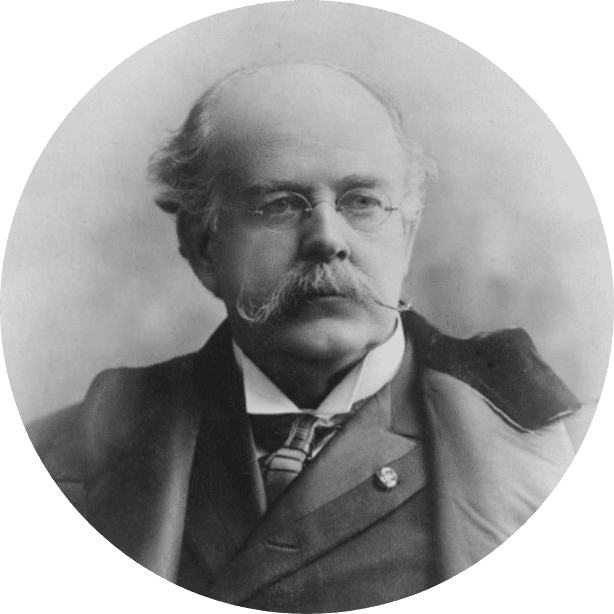
The Fuertes Medal is named for Estevan Antonio Fuertes (1838-1903). Born in Puerto Rico, educated in Spain and New York, he began his work at Cornell as a founding dean in Civil Engineering. He worked tirelessly to promote “state of the art” thinking for the technical fields, including the ability to communicate innovation. Photo source
The Douglas Whitney Prize for Engineering Student Presentations
-
Number of Awards
Up to four separate cash awards, in total, from across Cornell Engineering.
-
Focus
Non-traditional multimedia presentations.
-
Time Limit
Ten minutes or less per entry.
This competition is for undergraduate students (either as individuals or in teams) from Cornell Engineering. An individual student may only enter this competition once during this award cycle.
(Not available in 2024.)
Past Winners
-
Team Presenters: onewordstudios
In order of appearance: Wendy Zhang, Jeffrey Yao, Demi Chang, Michael Xing, Sam Sorenson, Aashna Saxena
- Title: SweetSpace Boston FIG Entry Video
- Course: Partner courses CS/INFO 4152 (Advanced Game Development) and ENGRC 4152 (Communication for Advanced Games Design)
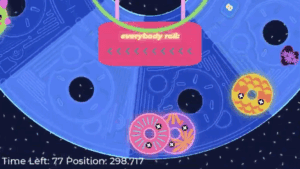
Teams are required to create a video for their entry to BostonFIG (Festival of Indie Games), and this was an exceptional effort by the onewordstudio team.
All members spoke equally, the game and its development cycle were explained clearly, and any viewer of this video immediately is swept up in the suspense and drive of this networked game created to be played cooperatively with family and friends.
-
Team Presenters: Mooooovvvve Studios.
Team Members: Erie Adames, Sheri Guo, Naina Pai, Shan Parikh, Yash Sahota, Christopher Talavera, Joy Zhang
- Title: Spectacle Boston FIG Entry Video
- Course: partner courses CS/INFO 4152 (Advanced Game Development) and ENGRC 4152 (Communication for Advanced Games Design)

Teams are required to create a video for their entry to BostonFIG (Festival of Indie Games), and this compelling work showcased the game beautifully.
Narrating the gameplay and development cycles, the speakers were clear, well rehearsed, and engaging. Amazing visuals, clear descriptions of gameplay, intriguing points about game development, and a history of how the game came to fruition keep viewers engaged and excited to try the game.
History of The Douglas Whitney Prize for Engineering Student Presentations
For CUP Awards, the Douglas Whitney Prize recognizes quality multi-modal, innovative, or alternative forms of traditional presentations. Entries should make interesting use of video or alternative formats to promote technical work, concepts, or projects associated with Cornell Engineering coursework.
This award is given to either individual students or all-undergraduate teams that are comprised of three or more people. Individual entrants must be declared majors in Cornell Engineering; for team submissions, the majority of members must be majors in Cornell Engineering. Competition is not available to M.Eng. or Ph.D students.
The Douglas Whitney Prize was established in 1987, with the intent to promote and recognize quality undergraduate student presentations in the Cornell Engineering.