Data Driven Learning and Control seminar series is organized by the Information and Decision Science Lab at Cornell University and aims to explore the latest advancements and interdisciplinary approaches to data-driven learning and control systems.
Watch on YouTube Live
Optimization for Decision-Making in the Era of Artificial Intelligence
Although significant progress has been made in expanding the capabilities of Artificial Intelligence (AI), there is very little progress in using AI to support decision-making systems that are safety critical. Researchers and scientists primarily in the area of Robotics discuss Agentic AI and promote a rather generalist perspective for decision-making. This is based on the idea of One-Architecture-Fits-All which further abstracts such architectures and makes them opaque and non-transparent. At the end of the day, opacity is a major barrier for any effort to fuse AI into safety critical systems.
In addition to the topic of opacity, discussions on the future of Agentic AI contrast Model Predictive Control with Reinforcement Learning. Some relevant questions on this space include: What is the proper decision-making methodology MPC or RL? And how can they be used within agentic AI systems that are designed to interact with the real world? In this talk, I will present my perspective on these topics by discussing two main research areas in my lab. The first is our ongoing work on off-road autonomy and the use of stochastic optimization for model predictive control. Here we will show the flexibility of MPC algorithms such as MPPI and discuss future directions in the areas of stochastic non-convex optimization. The second research area is our work on Deep Unfolded Neural Network architectures and their applications to decision-making and large-scale optimization. This second effort directly addresses the question of opacity and paves the way towards transparent neural network architectures for solving small and large-scale optimization for decision-making and control.
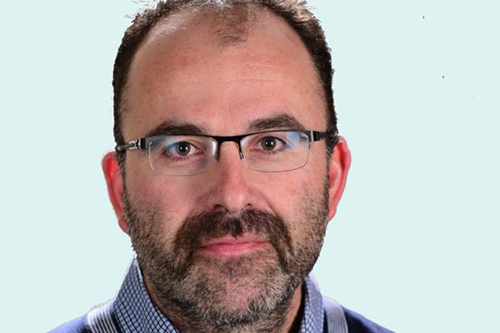
Bio: Evangelos Theodorou earned his diploma in electronic and computer engineering from the Technical University of Crete (TUC), Greece in 2001. He has also received a M.Sc. in production engineering from TUC in 2003, a M.Sc. in computer science and engineering from University of Minnesota in spring of 2007, and a M.Sc. in electrical engineering on dynamics and controls from the University of Southern California in spring 2010. In May of 2011, he graduated with his Ph.D., in computer science at USC. After his Ph.D., he became a postdoctoral research associate with the department of computer science and engineering at the University of Washington in Seattle. In July 2014 he joined the faculty of the Daniel Guggenheim School of Aerospace Engineering at the Georgia Institute of Technology as an assistant professor. His theoretical research spans the areas of control theory, machine learning, information theory and statistical physics. Applications involve autonomous planning and control in robotics and aerospace systems, bio-inspired control and design.