- Graduate Field Affiliations
- Civil and Environmental Engineering
- Environmental Quality (minor)
- Geological Sciences
Biography
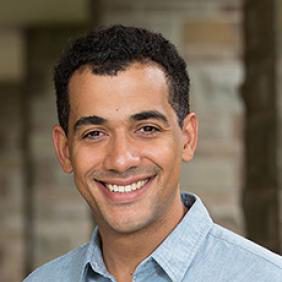
Matthew Reid is an associate professor at Cornell Civil and Environmental Engineering, where he leads the Biogeochemistry and Ecosystem Engineering Research Group. He received his Ph.D. in civil and environmental engineering from Princeton University, and was a Marie Curie Postdoctoral Fellow in the Environmental Microbiology Lab at the École Polytechnique Fédérale de Lausanne (EPFL) in Switzerland. He has also worked as a research assistant at the Lamont-Doherty Earth Observatory of Columbia University. He was a U.S. Peace Corps Volunteer in Tanzania, where he taught high school chemistry in Karatu.
Research Interests
The Reid Group performs research that advances the sustainable management of ecosystems that are critical for sustaining societal needs for water and food. The group combines experimental studies using molecular-level tools from (geo)chemistry and microbiology with modeling to link mechanistic descriptions of aquatic contaminant dynamics with the macro-scale biogeochemical functioning of natural and nature-based systems. Students in the Reid Group study a range of inorganic environmental contaminants, including nonpoint source nutrients in agricultural watersheds and geogenic metal(loid) contaminants in soils and drinking water systems, with a growing focus on how hydro-biogeochemical processes are impacted by climate change. The interdisciplinary and cross-scale nature of the Reid Group’s research responds to the need for holistic and systems-level understanding of ecosystem function to guide the design and management of aquatic environments under changing environmental conditions. Reid’s research program has been supported by NSF, USDA-NIFA, SERDP, and other agencies, and has been recognized with an NSF CAREER Award.
Teaching Interests
Reid has a strong commitment to STEM education that dates to his work as a high school chemistry teacher with the U.S. Peace Corps in Tanzania. His teaching emphasizes rigorous understanding of fundamental science and engineering principles and the application of these principles to complex environmental systems, while instilling confidence, enthusiasm, and critical thinking among students. Reid teaches CEE 4530: Laboratory Research in Environmental Engineering and CEE 4535/6530: Water Chemistry for Environmental Engineering. He has twice received excellence in teaching awards from Cornell Engineering.
Select Publications
-
Y. Sang, I. Petrovic, L. DuPlooy, Z. Zhang, R. Tappero, M. Ge, L. Yang, and M.C. Reid. Biogeochemical Controls on Wood Degradation as a Source of Bioavailable Carbon in Denitrifying Bioreactors. Environmental Science and Technology, 2025, in press
-
Y. Sang, E. Christiansen, O. Pietz, L. Abu-Ali, C. Sinton, R. Johnston, and M.C. Reid. Geochemical and Hydrological Controls on Manganese in a Weakly-Stratified Drinking Water Reservoir. ACS ES&T Water, 2024, 4, 10, 4368–4378
-
H. Yoon, M.A.P. Vega, J. Wang, A.J. Poulain, A. Giometto, L. Aristilde, and M.C. Reid. Repression of microbial arsenite uptake and methylation by dissolved organic carbon. Environmental Science and Technology Letters, 2024, 2024, 11, 8, 838–844
-
Z. Zhang, Y. Sang, S. Echaravaria, N. Napp, and M.C. Reid. Real-Time Control of Exogenous Carbon Dosing in a Denitrifying Bioreactor Treating Agricultural Drainage. ACS ES&T: Engineering, 2024, 4, 6, 1433–1443
-
P.M. McGuire, N. Butkevitch, A. Saksena , M.T. Walter, J.S. Shapleigh, and M.C. Reid. Oxic-Anoxic Cycling Promotes Coupling Between Complex Carbon Metabolism and Denitrification in Woodchip Bioreactors. Environmental Microbiology, 2023, 15, 9, 1696-1712.
Select Awards and Honors
- Franco-American Commission Scholar Award, Université Grenoble Alpes 2025
- NSF Early Career Development (CAREER) Award 2023
- Community-Engaged Practice and Innovation Award, Einhorn Center for Community Engagement 2023
- Marie Curie International Postdoctoral Fellowship, EPFL 2014
- Science, Technology, and Environmental Policy Fellow, Princeton University 2011
- New Jersey Water Resources Research Institute Award 2010
- National Science Foundation Graduate Research Fellowship 2008
Education
- B.A. (Chemistry), University of Chicago 2004
- Ph.D. (Civil and Environmental Engineering), Princeton University 2014