Feature Stories
-
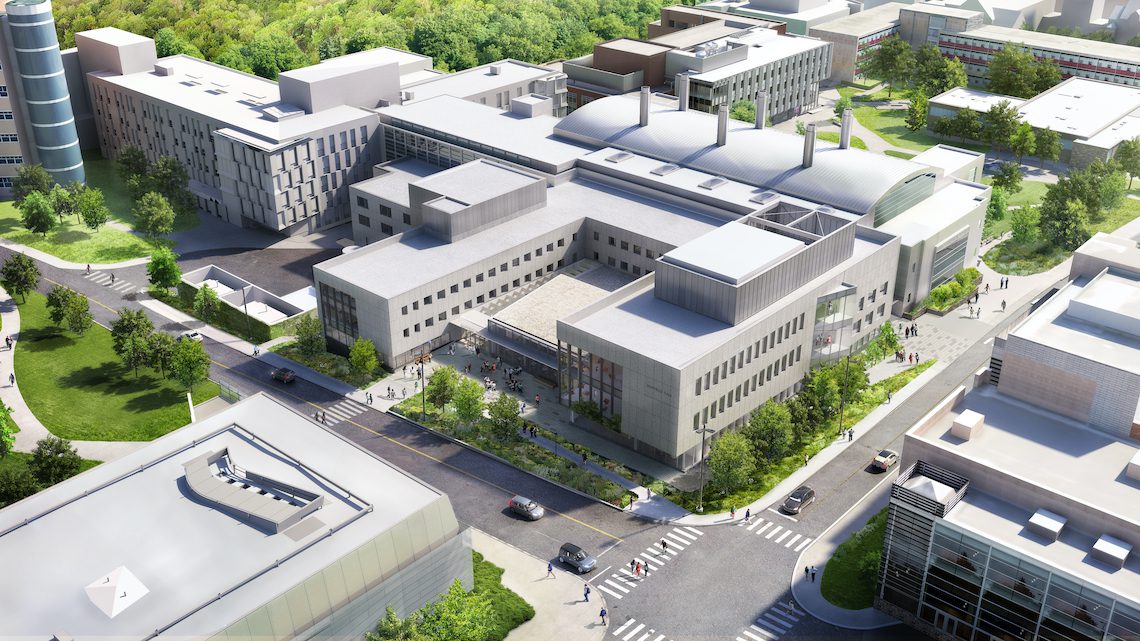
![rendering of duffield Hall as seen from campus road]()
Historic $100 million investment to expand Engineering’s Duffield Hall
A philanthropic commitment from David A. Duffield ’62, MBA ’64, is supercharging Cornell Engineering’s future with quantum labs, AI and robotics space, and a bold new vision for the School of Electrical and Computer Engineering.
-
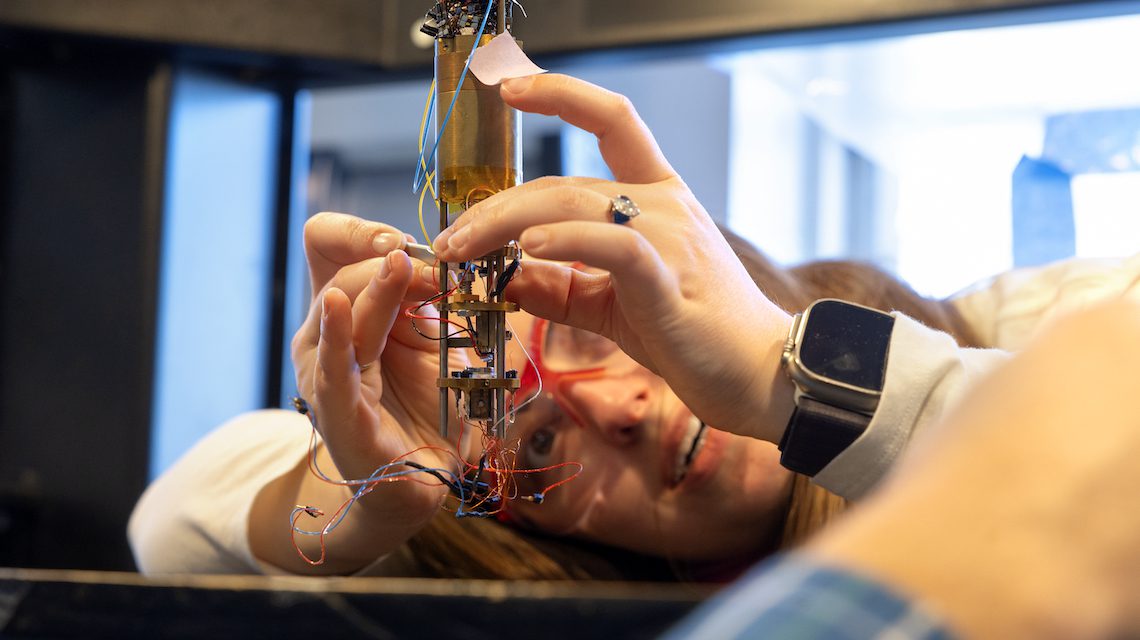
![student looks closely at a hanging device]()
Solar solutions: ‘Crazy’ perovskite offers sustainable alternative to silicon
Cornell engineers are showing how a ‘frankly crazy’ mineral could blow silicon out of the sun power game.
-
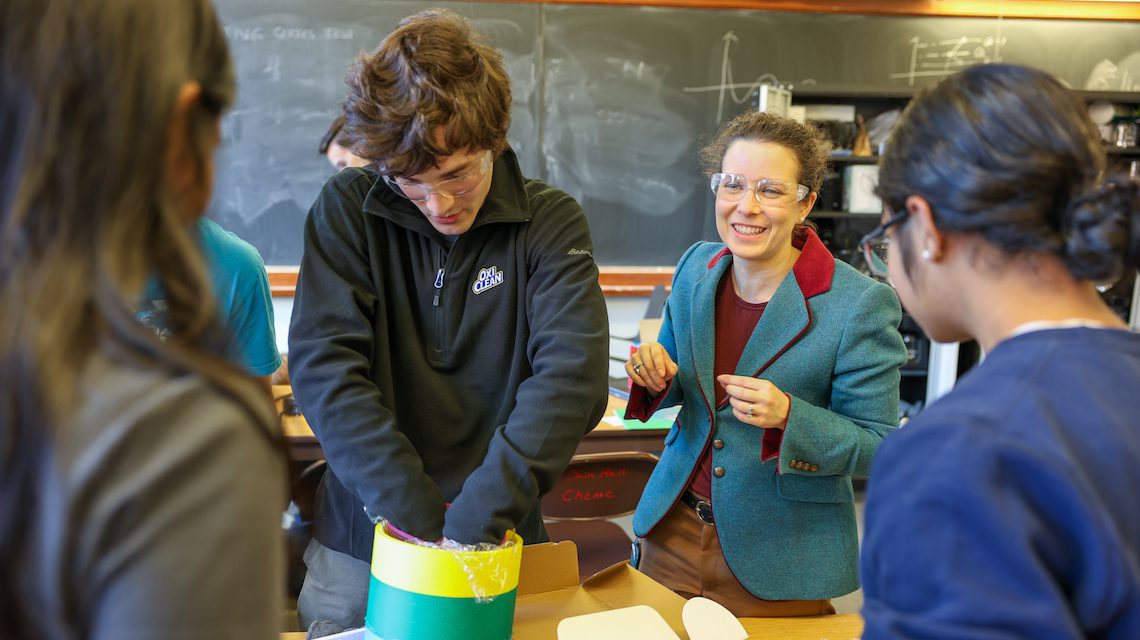
![Allison godwin smiles as she instructs three students]()
Revolutionizing engineering education: The dawn of a new research pillar
A surprise email unleashed Cornell Engineering’s game-changing research revolution in how engineers learn, belong and thrive.
-
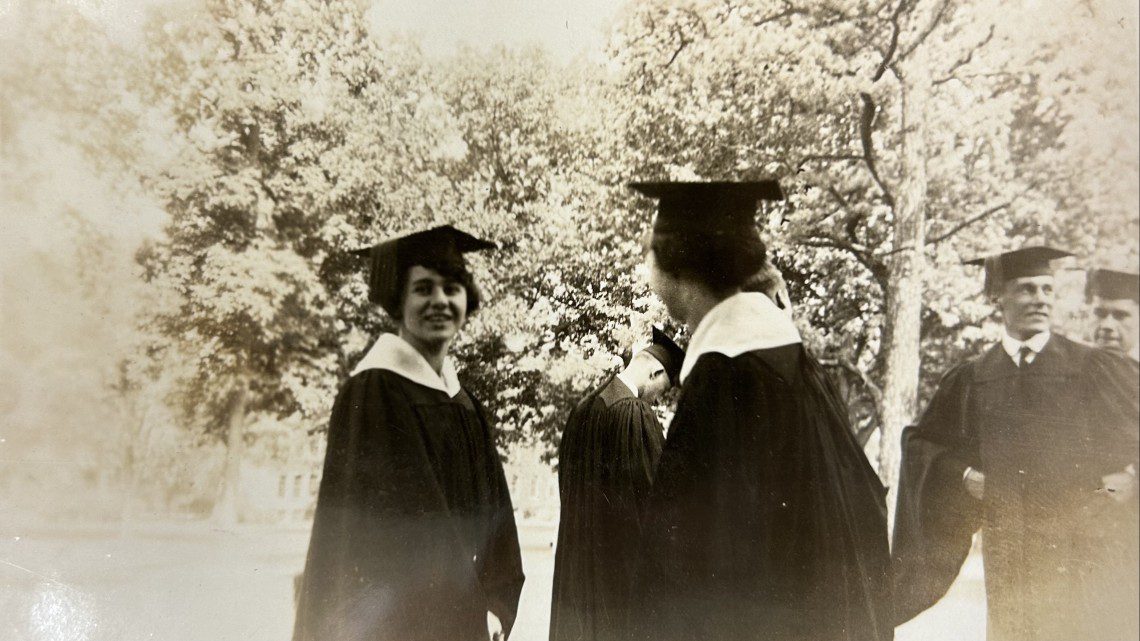
![black and white photo of three students in graduation gowns]()
Marie Reith’s 1916 vow to ‘do good’ lives on in new scholarship
A pioneering woman’s 109-year-old promise to ‘do some good’ is funding first-generation engineers thanks to a life-changing meeting.

News Briefs
-
![A neural implant developed at Cornell rests on a grain of salt. About 300 microns long and 70 microns wide, it’s the smallest neural implant capable of wirelessly transmitting brain activity data.]()
Neural implant smaller than salt grain wirelessly tracks brain
Cornell researchers and collaborators have developed a neural implant so small that it can rest on a grain of salt, yet it can wirelessly transmit brain activity data in a living animal for more than a year.
-
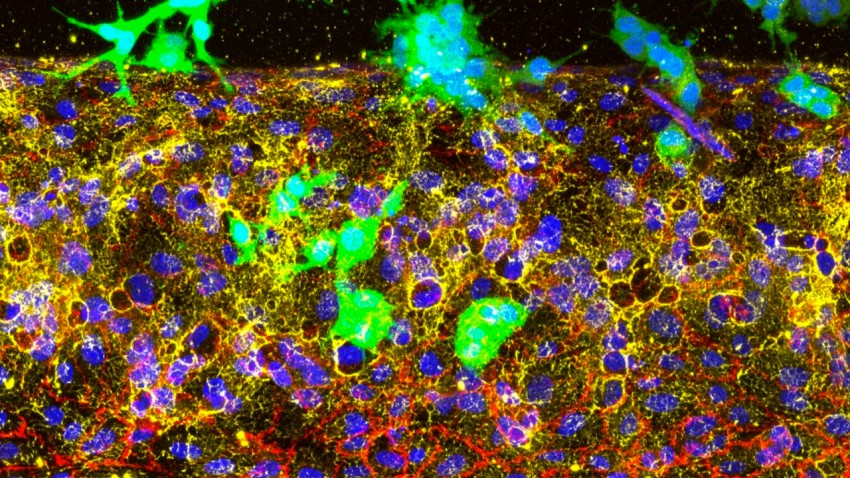
![A 3D tumor vessel-on-a-chip model]()
Key driver of pancreatic cancer spread identified
A new study revealed how a deadly form of pancreatic cancer enters the bloodstream, solving a long-standing mystery of how the disease spreads and identifying a promising target for therapy.
-
![Buses in some Chattanooga, Tennessee, neighborhoods will be included in an AI-powered network designed by Cornell engineers to dynamically recommend efficient routes and modes of travel through a mobile app.]()
Cornell to help revamp Chattanooga public transit with AI power
Cornell researchers are helping to transform portions of Chattanooga’s transit system into a seamless, AI-powered network where buses, shuttles, electric cars and bikes work together to provide the most efficient routes – at the push of a button.
-
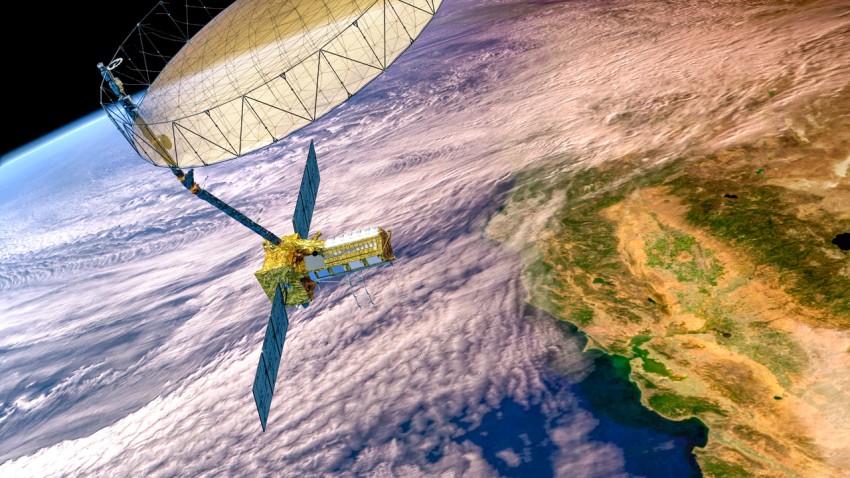
![Artist’s rendering of the NASA-ISRO SAR satellite]()
Radar satellite will give new view of changes to Earth’s surface
NASA and the Indian Space Research Organization are launching a satellite that uses synthetic aperture radar – and Cornell expertise – to monitor nearly all the planet’s land- and ice-covered surfaces twice every 12 days.

-
![]()
3D-printed superconductor achieves record performance
Nearly a decade after they first demonstrated that soft materials could guide the formation of superconductors, Cornell researchers have achieved a one-step, 3D printing method that produces superconductors with record properties.
-
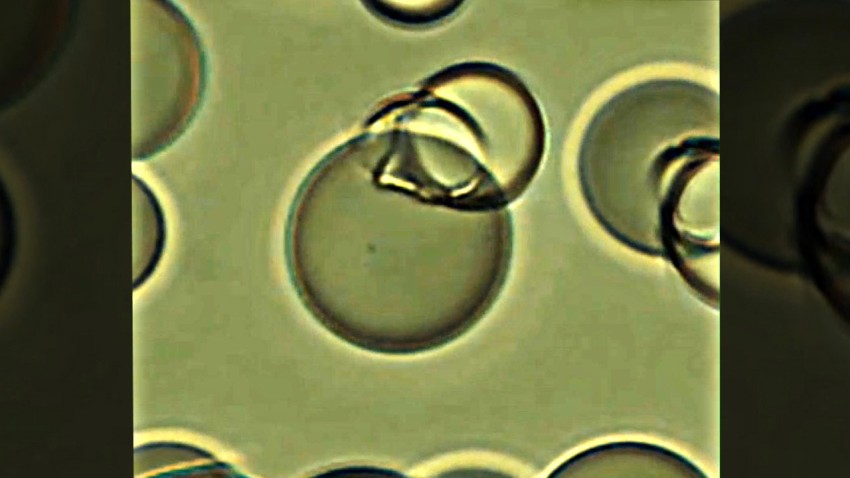
![thin liquid film to an opaque emulsion]()
Shapeshifting liquid crystal can form emulsions, then change back
Cornell researchers have developed a two-phase liquid crystal system that can rapidly change – and hold – its shape, transforming from a transparent thin liquid film to an opaque emulsion, and then back again, all with a brief jolt of a high-frequency electric field.
-
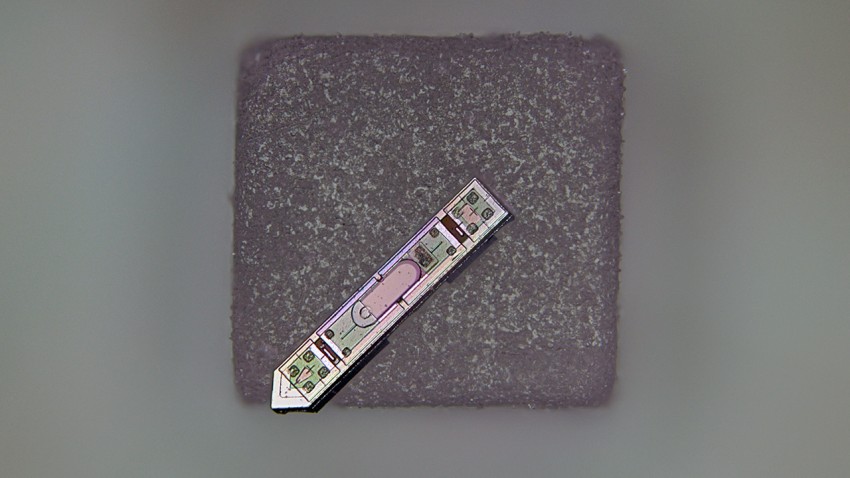
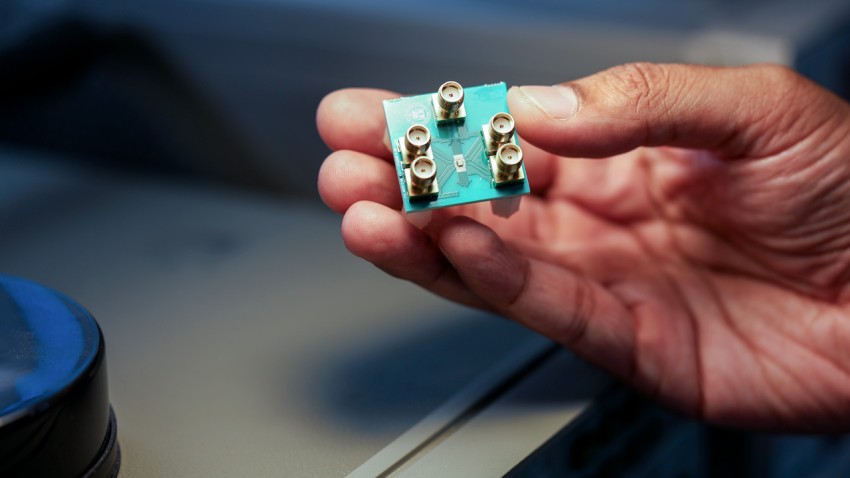
![Low-power microchip called a “microwave brain,”]()
Researchers build first ‘microwave brain’ on a chip
Cornell Engineering researchers have developed a low-power microchip they call a “microwave brain,” the first processor to compute on both ultrafast data signals and wireless communication signals by harnessing the physics of microwaves.
-
![Patrick Fulton, the David Croll Sesquicentennial Fellow and assistant professor of earth and atmospheric sciences in Cornell Engineering, and Huiyun Guo, a postdoctoral researcher at CalTech, prepare sensors for a borehole observatory.]()
Ultra-deep drilling reveals mysteries of Japan tsunami
An international marine research team guided by Cornell expertise has successfully completed an ambitious drilling project to investigate the plate boundary fault that ruptured during the Tohoku earthquake that devastated Japan in 2011.


-
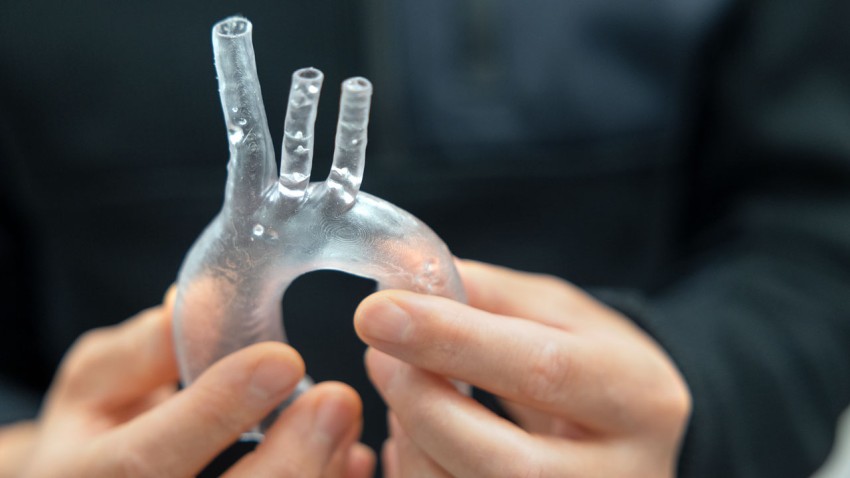
![Anova Biomedical's first-of-its-kind biodegradable graft material for cardiovascular patients not only expands and contracts likek blood vessels; it is also absorbed into the body as new cells take its place.]()
New biodegradable graft could help cardiovascular patients
The first-of-its-kind material not only expands and contracts like blood vessels but is also biodegradable; new vascular cells to grow around the graft as the body absorbs it.
-
![soft jellyfish robot]()
‘Embodied energy’ powers modular worm, jellyfish robots
In the same way that terrestrial life evolved from ocean swimmers to land walkers, soft robots are progressing, too, thanks to recent Cornell research in battery development and design.
-
![give people gather around equipment in tool shop]()
What’s new at Cornell Engineering
A roundup of new initiatives, leadership updates and strategic changes across the college Cornell Engineering sets ambitious goal for community-engaged learning Through a new collaboration with the Einhorn Center, Cornell Engineering will ensure that…
-
![Lynden Archer, right, the Joseph Silbert Dean of Engineering, presents James C. Morgan ’60, MBA ’63 with the Cornell Engineering Distinguished Alumni Award.]()
James Morgan ’60, MBA ’63, earns Engineering’s highest alumni honor
In recognition of his transformative leadership in nanomanufacturing technology, James C. Morgan ’60, MBA ’63, was presented with the Cornell Engineering Distinguished Alumni Award – the college’s highest alumni honor.


Nano Stories
Overheard
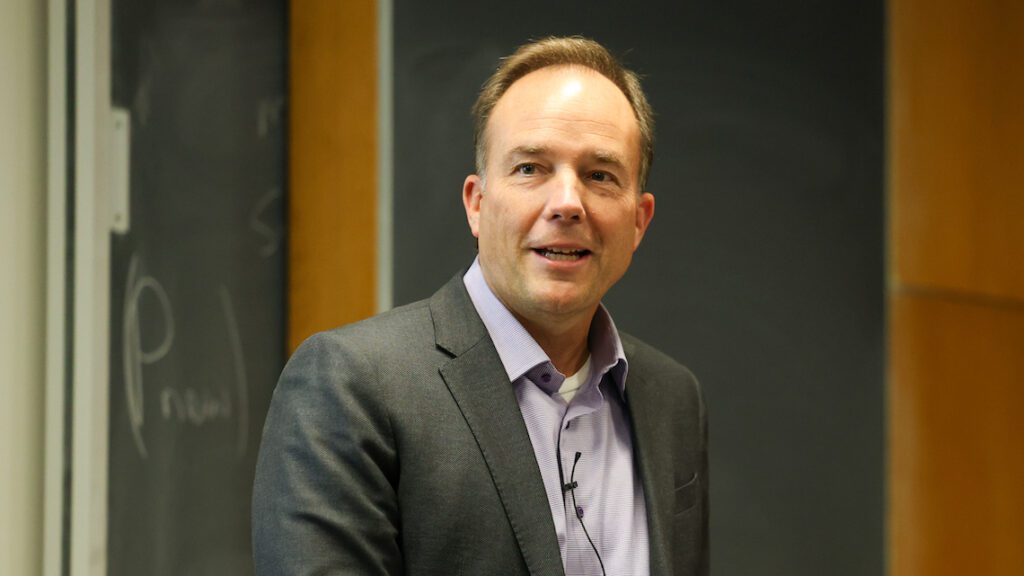
MDpanel CEO Jason Erdell ’95 talks AI, adaptability in Cheng Lecture
“Cornell taught me rigor. It may not feel like it at the time, but that grit, that ability to struggle through a hard problem, is one of the greatest advantages you’ll carry forward,” said Jason Erdell ’95, CEO of MDpanel.
Around Campus

Students’ color-changing tomato reaches national contest finals
An engineering student’s invention that turns tomato plants a vivid red when soil nitrogen levels are low has been named a finalist in a competition run by the National Inventors Hall of Fame.
In the Field
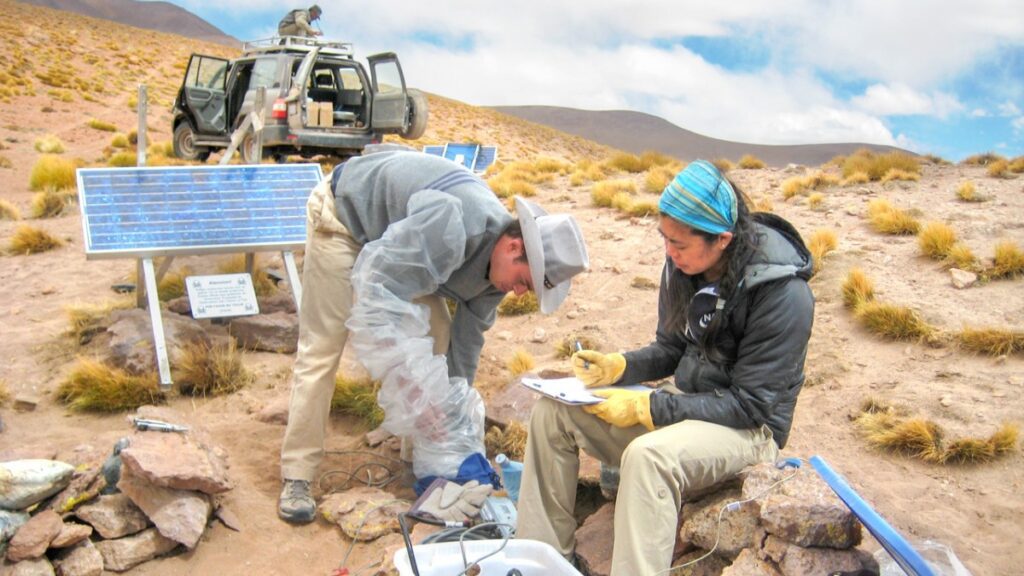
Analysis reveals signs of life in ‘zombie’ volcano
Despite Bolivia’s Uturuncu being ostensibly inactive for more than 250,000 years, Cornell Engineering scientists detected signs of life in the “zombie” volcano, likely due to molten rock releasing gas that pushes against the upper crust.
Teaching Excellence
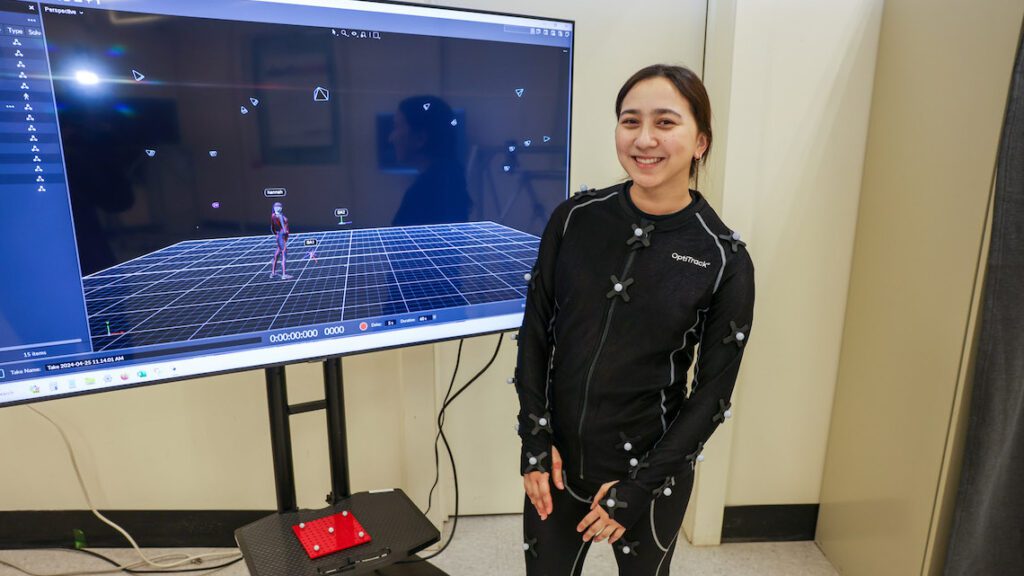
Students explore real-time dynamics in Motion Studio
From drones to dancers, students are getting hands-on experience analyzing how motion shapes design in the new state-of-the-art Motion Studio.
Trending

Students’ Baja Racing team roars to series of victories
The Cornell Baja Racing team dominated through this year’s competition season with three first-place finishes, earning the coveted Iron Team title.
Maker’s Corner

Student-designed technology reaches space station
After more than eight years of engineering, students sent their Alpha CubeSat spacecraft to the International Space Station.