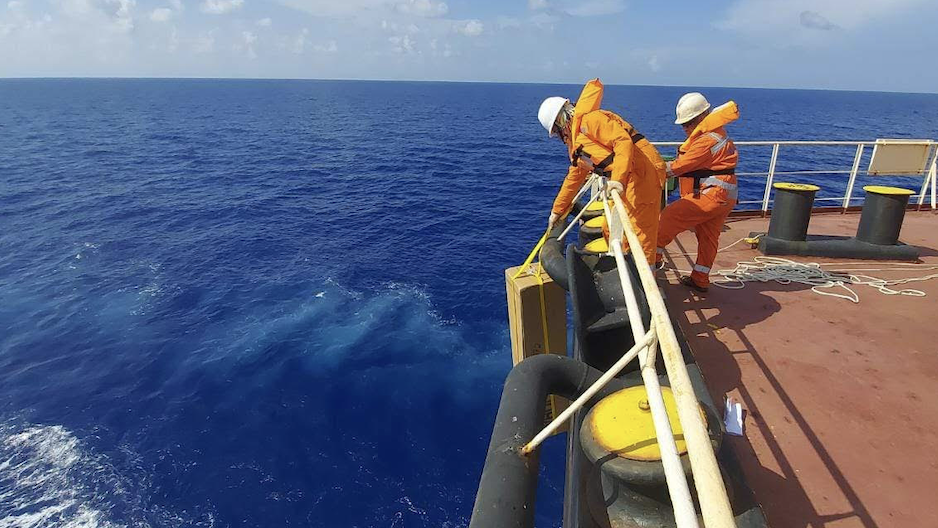
“I just kind of fell into oceanography,” Una Miller said, reflecting on her undergraduate years at the University of Washington. “But the more I learned, the more I realized how integral the ocean is – to climate, to weather, to ecosystems, to the economy. It just kept pulling me in.”
Miller has joined Cornell’s Department of Earth and Atmospheric Science as an assistant professor and part of the Cornell Oceans consortium. Her work focuses on the physics of the ocean and its vital role in Earth’s climate system, particularly the exchange of heat, momentum and gases between the ocean and atmosphere, and the processes that inject oxygen into the deep ocean. “Air-sea interaction and ocean ventilation, those are the two broad themes of my work,” she said. “Both are really important for weather and climate, but also for the health of marine ecosystems and fisheries.”
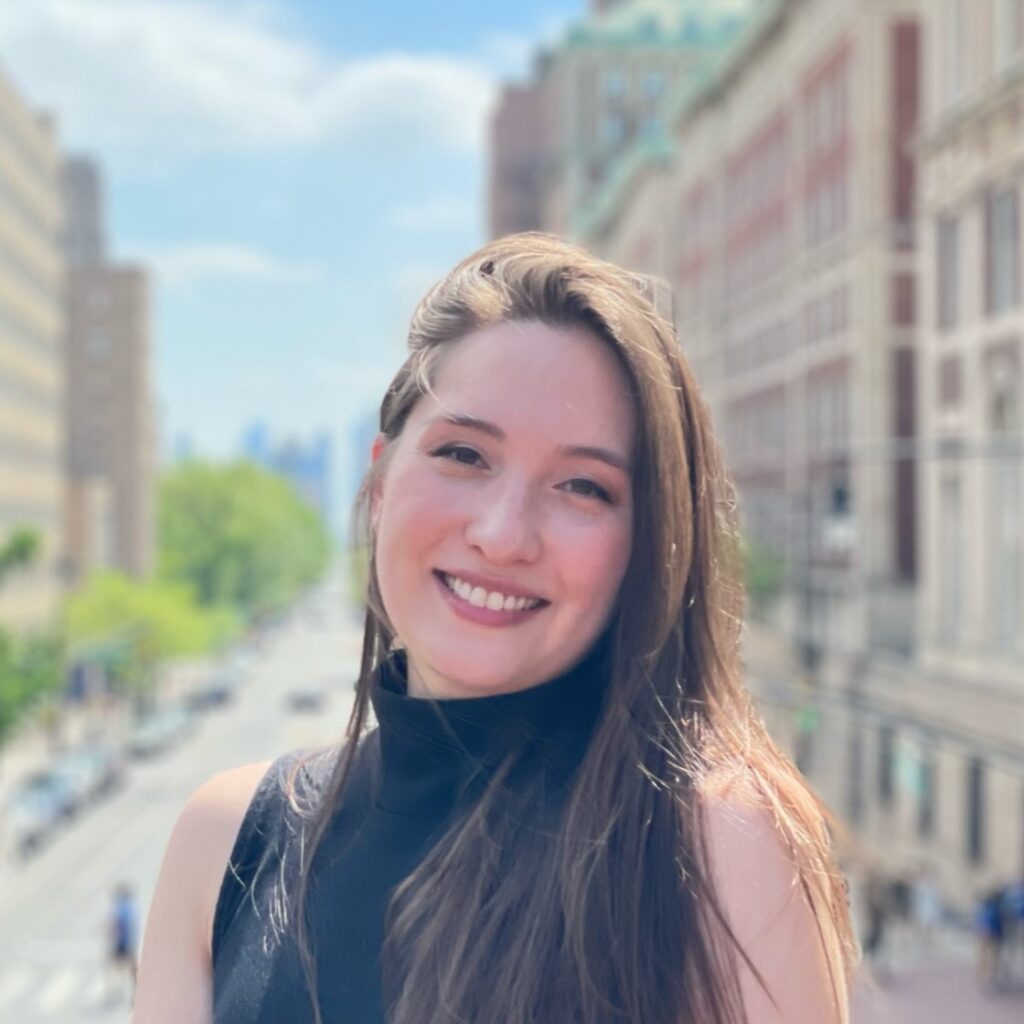
Miller grew up in Seattle, Washington, surrounded by the dramatic geology of the Pacific Northwest. Despite the natural setting, she laughs that she “was never outdoorsy” as a kid. Instead, she immersed herself in video games and books. Her first real encounter with ocean science came at the University of Washington, where a course on oceans and climate change introduced her to oceanography professor Paul Johnson. After class one day, she approached him and soon found herself working in his lab.
That decision shaped the next decade of her life. Miller spent nearly her entire undergraduate career in Johnson’s lab, learning not only how to conduct fieldwork on research cruises but also how to code and analyze data. “I had no coding experience before. My advisor handed me a ‘Learn MATLAB’ book, and I had to figure it out,” she said. “I loved it. Seeing what the data could tell us, that’s when I really got hooked.”
Encouraged by her mentor, Miller applied to graduate school and was accepted into Columbia University’s Lamont-Doherty Earth Observatory. There, she worked with physical oceanographer Christopher Zappa, studying ocean boundary layer turbulence and air-sea interaction.
Her doctoral research took her to Antarctica, where she studied polynyas – openings in sea ice created by fierce offshore winds. Though small on a global scale, these windows in the ice are sites of deep-water formation, where cold, dense water sinks to the abyss. These waters are part of a global ocean circulation system that shapes climate and the biogeochemical cycles of important elements like carbon and oxygen.
During her Ph.D., she deployed and recovered moorings in Antarctic waters, platforms on which instruments are deployed in the water for long stretches before being hauled back up, data-rich, from the depths. “It’s like Christmas when you recover them and see what you got,” she said with a grin.
After earning her doctorate in 2023, Miller moved to the University of Rhode Island Graduate School of Oceanography for a postdoctoral fellowship with Jaime Palter. There, she analyzed oxygen sensor data from a mooring array in the Labrador Sea. The work pushed her into the realm of biogeochemistry while also expanding her scale of inquiry – from small, localized processes to basin-scale circulation.
“It broadened my scientific horizon,” Miller said. “I got to learn a new instrument, tackle the challenges of oxygen sensor drift, and start thinking about much larger processes. It was a whole new perspective.”
At Cornell, Miller plans to build on that trajectory. She is working to install sensors on Antarctic moorings to study oxygen uptake and variability in polynyas. She also hopes to guide students in analyzing the vast troves of biogeochemical Argo float data – publicly available observations from autonomous floats drifting throughout the oceans.
“These data are out there and it’s incredible. It’s a perfect project for undergraduates to dive into and learn what oceanography is all about,” she said. Her own path, she emphasizes, was made possible by undergraduate research opportunities, and she is eager to provide the same mentorship she once received. “If a student knocks on my door and wants to talk about oceanographic research, my answer will just about always be yes.”
Cornell held a real draw for Miller. “We couldn’t do oceanography without engineers,” she notes. “And being surrounded by atmospheric scientists – our scientific cousins – creates so many opportunities. I love that Cornell feels so fluid across disciplines.”
Outside of science, Miller enjoys walking her dog, cooking, biking and traveling to see family and friends. She’s also planning her wedding and looks forward to exploring Ithaca’s outdoor offerings, including snowboarding at nearby Greek Peak. “I used to scuba dive, but these days it’s more about everyday joys like friends, family and my dog,” she said.
From coding her first MATLAB script as an undergraduate to recovering moorings in Antarctica, she has followed the ocean’s currents wherever they lead. “What motivates me,” she said, “is understanding how the ocean shapes our climate and our future. There’s still so much to discover.”