The Department of Earth and Atmospheric Sciences has long offered a Master of Engineering (M.Eng.) degree, though historically it has enrolled only a handful of students each year. Designed as a professionally oriented program, the M.Eng. is distinct from a Master of Science (M.S.) degree. Instead of a purely research focus, the M.Eng. emphasizes applied skills, industry partnerships, and real-world projects that prepare graduates to step directly into careers in government, nonprofit organizations or industry. Students typically complete the program in two or three semesters, often working closely with faculty and external partners on projects with tangible outcomes.
This year marks a turning point for the program. With the arrival of Chloé Arson as a professor and also director of the M.Eng. program in earth science and engineering, the department is taking a fresh look at what the degree can become. Arson, who trained as an engineer before building her career in earth sciences, sees both challenges and opportunities in leading the program. “Traditionally, earth and atmospheric sciences are not engineering disciplines, and so it’s a little bit difficult to find a very obvious identity for this program,” she said. “My first goal is to assess the needs and what the community foresees the role of the M.Eng. could be in the department. I think there are fantastic opportunities to grow.”
Arson is pursuing several strategies to give the program a stronger profile and clearer career pathways. On the atmospheric sciences side, she sees opportunities to connect with climate institutes and environmentally focused organizations. On the geological sciences side, she notes that the department’s traditional ties with the mining and petroleum industries now also encompass geothermal energy, carbon storage and hydrogen technologies, which are areas with significant potential for M.Eng. students. “We need to have some vision of the most promising areas or sectors in industry that can lead to jobs, and then develop partnerships with companies to make the program more applied and attractive,” she said.
Arson is also committed to mentoring and building community among students. While past cohorts sometimes included only two or three students, the program now counts six students, five of whom are on campus. Arson has organized a mini-orientation, created shared resources, and intends to plan informal lunches to help students feel connected. “Being on campus is not only about the instruction we receive, it’s the experience of the community and the networking,” she said. “I’d like to grow that aspect of it.”
Looking ahead, Arson envisions broader engagement across campus and beyond. She is exploring the creation of a consortium around subsurface energy technologies, which would bring companies, researchers and students together to collaborate on pressing technical challenges. She is also considering new tracks within the M.Eng., such as geotechnical engineering focused on rock mechanics. “There’s no blueprint, so that gives us ample freedom to be creative,” she said. “I don’t see this as a high-pressure job. I think it can be a very creative job, and also a very rewarding one because I love mentoring.”
Finally, Arson hopes to strengthen ties with alumni. She sees alumni as vital partners who can provide project opportunities, mentorship and insight into the evolving landscape of careers in earth and atmospheric sciences. “If there’s any interest in working with our M.Eng. students, I’d be happy to hear from alumni,” she said.
As the program grows, Arson is confident it will not only prepare graduates for meaningful careers but also enrich the department’s entire community by bridging research, education and professional practice.
Some of our Current M.Eng. Students
Four of our current Master of Engineering students answered a few questions for us. Their responses highlight the many paths to an M.Eng. from the Department of Earth and Atmospheric Sciences as well as their varied goals for after they have graduated.
-
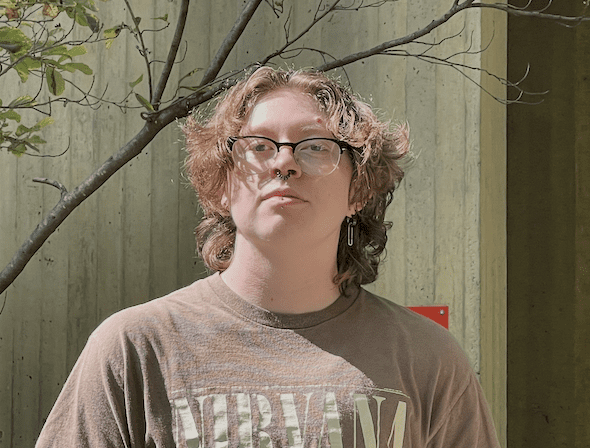
![Lee Dorsey]()
Lee Dorsey
What is your undergraduate degree in?
Astronautical Engineering from Capitol Technology University
Why did you choose to enroll in the EAS M.Eng. program?
I chose the EAS M. Eng because I wanted to broaden my skillset and explore the overlap between earth science and aerospace. I spent so much of my undergrad focused on space mission planning and systems engineering that I missed out on the greater applications and research objectives that came along with it.
What do you hope to do once you graduate?
I’m hoping to work on space missions that utilize remote sensing for comparative planetary science.
-
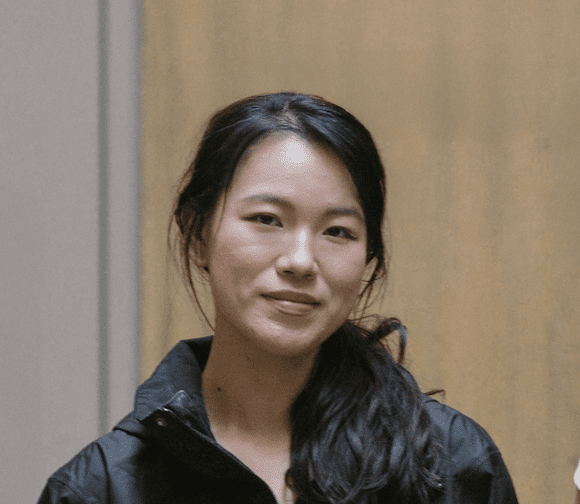
![Tyler Foote]()
Tyler Foote
What is your undergraduate degree in?
Environmental Science with a minor in Biology from Eastern University in Pennsylvania
Why did you choose to enroll in the EAS M.Eng. program?
I was very interested in the work being done in the EAS program and I felt that this could be a great next step in my academic career. I wanted to gain a bigger background in engineering to be a better interdisciplinary researcher and be able to approach problems from a variety of angles. As someone interested in space exploration, a huge component of that field is engineering and I did not want to be left out of it.
What do you hope to do once you graduate?
I hope to continue towards my Ph.D. and concentrate on research within the field of astrobiology. I am extremely interested in the limits of life on Earth, the processes that facilitate the survival of those extremophiles, and how a strong foundation in Earth science can apply to the search for habitability beyond our planet.
-
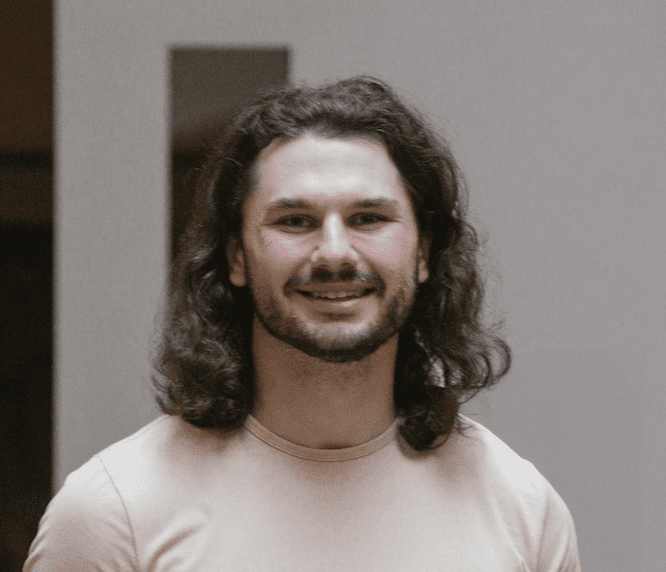
![Yijing (Laurel) Lu]()
Yijing (Laurel) Lu
What is your undergraduate degree in?
Atmospheric Sciences from Nanjing University of Information Science & Technology
Why did you choose to enroll in the EAS M.Eng. program?
EAS at Cornell is my first choice when I was applying a graduate degree. I believe the first-class researchers, the state-of-the-art facilities, and the access to enriched databases, coupled with the interdisciplinary education here, could support me to further expand my expertise in the field and allow me to contribute to research initiatives that address real-world environmental issues. I am eager to study here to further explore intercontinental differences and study further to solve real-world climate issues (climate change, air pollution) on a global scale. I wanted to work specifically with Professor Natalie M. Mahowald and now I am learning how to use the climate model with her. It is of great significance to me.
What do you hope to do once you graduate?
I am inspired to pursue a Ph.D. program and continue my academic journey in this field after completing this program.
-
![Nichiolas Zajac]()
Nicholas Zajac
What is your undergraduate degree in?
Geology and Geophysics from the University of Wisconsin – Madison
Why did you choose to enroll in the EAS M.Eng. program?
I chose to enroll in the EAS M.Eng program for two main reasons. One reason was that I saw a lot of advantages to the interdisciplinary emphasis that the program has. This emphasis will allow me to become a more multifaceted geophysicist and will help develop my technical skills so that I can contribute at a higher level once I graduate. The other reason was a combination of the specific courses that I plan on taking and the professors. The EAS M.Eng program had by far the most interesting and pertinent courses of all of the programs that I was considering, and I was thoroughly impressed by the background of the professors that instruct them.
What do you hope to do once you graduate?
Prior to enrolling in the EAS M.Eng program, I worked for four years as a geologist at a major engineering and consulting company. While I obtain my M.Eng degree, I will continue to work for them part-time, and then I am planning to start back with them full-time once I graduate. I’m planning on utilizing this degree to propel myself into a more technical role at the company, ideally ending up as a senior technical consultant either in the environmental remediation sector or in the energy sector.