Imagine. Design. Create.
Real innovation comes from the marriage of deep technical knowledge with creative imagination. Our programs nurture both the mind and the imagination. We accelerate discovery to make impactful and lasting changes, and we foster engineering leaders and entrepreneurs who will go on to solve the world’s biggest problems.
News Highlights
-
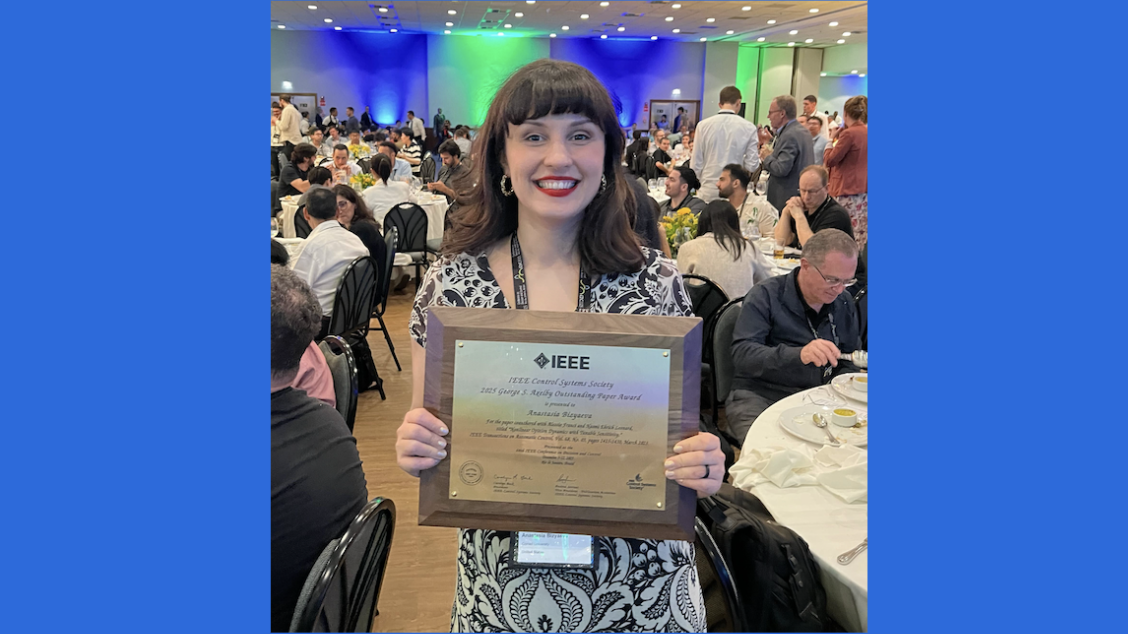
![Anastasia Bizyaeva holds the plaque she was given to recognize her Axelby award at an IEEE conference in December, 2025.]()
Bizyaeva Receives IEEE Control Systems Society’s Axelby Award
Anastasia Bizyaeva, assistant professor in the Sibley School of Mechanical and Aerospace Engineering at Cornell University, has been named the recipient of the 2025 IEEE Control Systems Society (CSS) George S. Axelby Outstanding Paper Award for her publication in IEEE Transactions on Automatic Control.
-
![Sava Iliev ’28, engineering physics major and suspension subteam member for the 2025-26 Baja Racing team, drives the car the team built last year at their practice track this fall. This year’s team is testing new ideas and adjustments using the old car before they build the car they will take to competition this season.]()
Students’ Baja Racing team roars to series of victories
To build a winning off-road car, the student-led Baja Racing team built on the legacy and lessons of those who came before them.
-
![]()
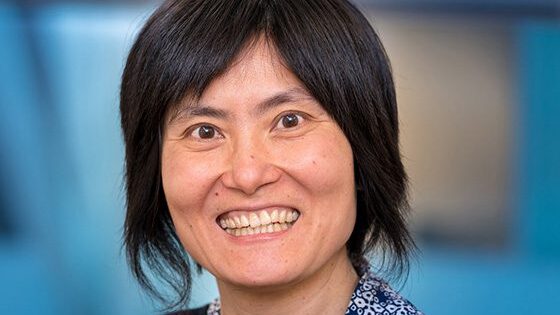
Wang receives 2025 Stanley Corrsin Award from American Physical Society
Z. Jane Wang, professor in Cornell’s Sibley School of Mechanical and Aerospace Engineering and in the Department of Physics in the College of Arts and Sciences, has been named the 2025 recipient of the Stanley Corrsin Award from the American Physical Society (APS).
-
![]()
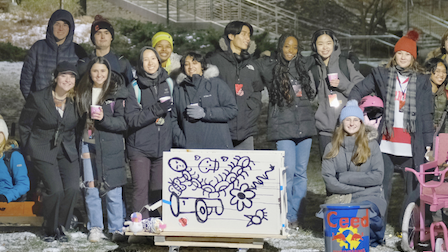
Building creativity into engineering
Growing up between Dallas, Texas, and Lagos, Nigeria, Benjamin Okoronkwo learned early to adapt to new surroundings and make the most of every experience. Now a junior majoring in mechanical engineering in Cornell’s Sibley School of Mechanical and Aerospace Engineering, Okoronkwo brings that same adaptability and creative energy to his work on campus.

Our Degree Programs
-
Mechanical Engineering
Involves the design and analysis of machines, engines, and systems. Perfect for those fascinated by motion, energy, and innovative mechanical solutions.
-
Aerospace Engineering
Involves designing and testing aircraft and spacecraft. It’s ideal for those excited by flight, space exploration, and advancing technologies in propulsion and aerodynamics.
-
Applied Mathematics
Uses math to solve real-world problems in science and engineering. Ideal for those who enjoy mathematical modeling and want to apply theory to practical issues.
-
Theoretical and Applied Mechanics
Explores the principles of motion and forces in engineering systems. Great for those who want to innovate in fields like aerospace, robotics, or structural design.
Strategic Research Areas
-
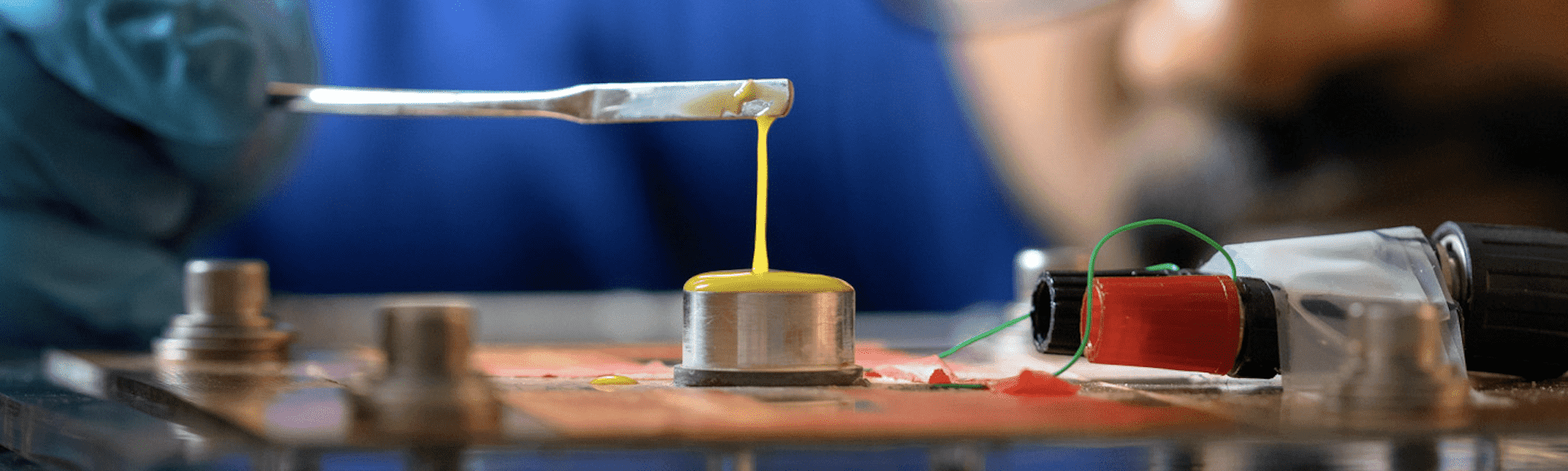
![yellow material stretching between a base and an instrument.]()
Advanced Manufacturing and Materials
Material design through understanding how nano, micro, and/or mesoscale mechanisms result in macroscale properties.
-
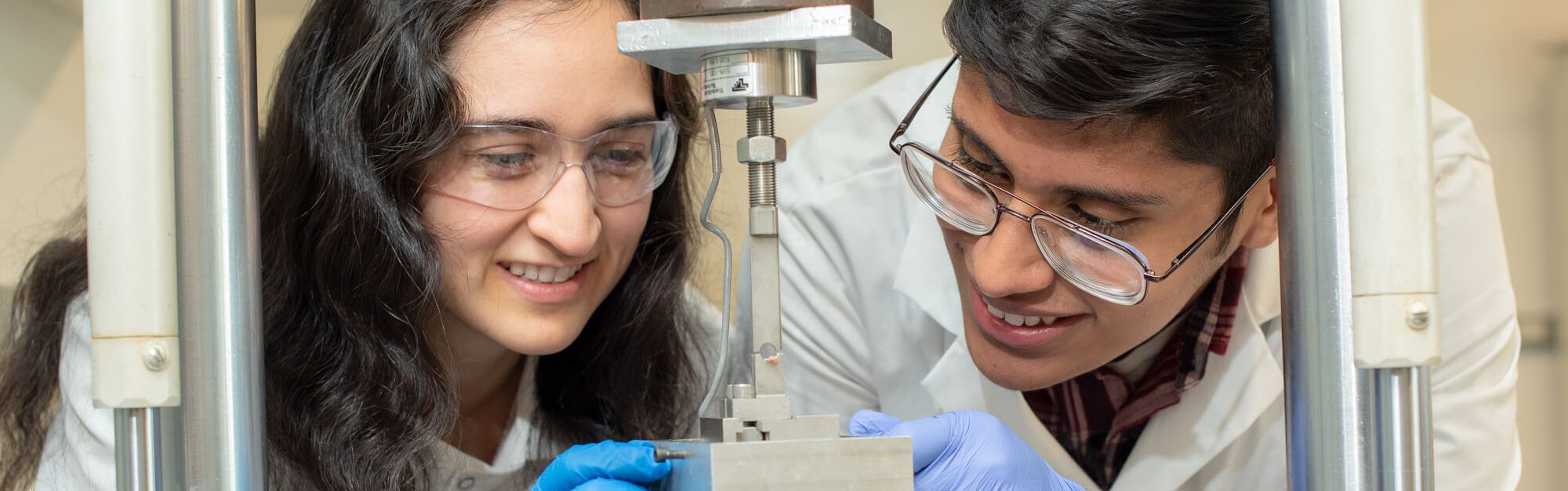
![Two students in white lab coats and protective goggles examine a piece of equipment in the Hernandez lab]()
Biomechanics and Mechanobiology
Investigating the role of mechanical forces in physiological and disease processes.
-
![person holding a smartphone with a blood-testing device attached]()
Bioengineering and Healthcare
Technology research translated to biomedical applications, such as early cancer detection, immunology treatments, and global and mobile health.
-
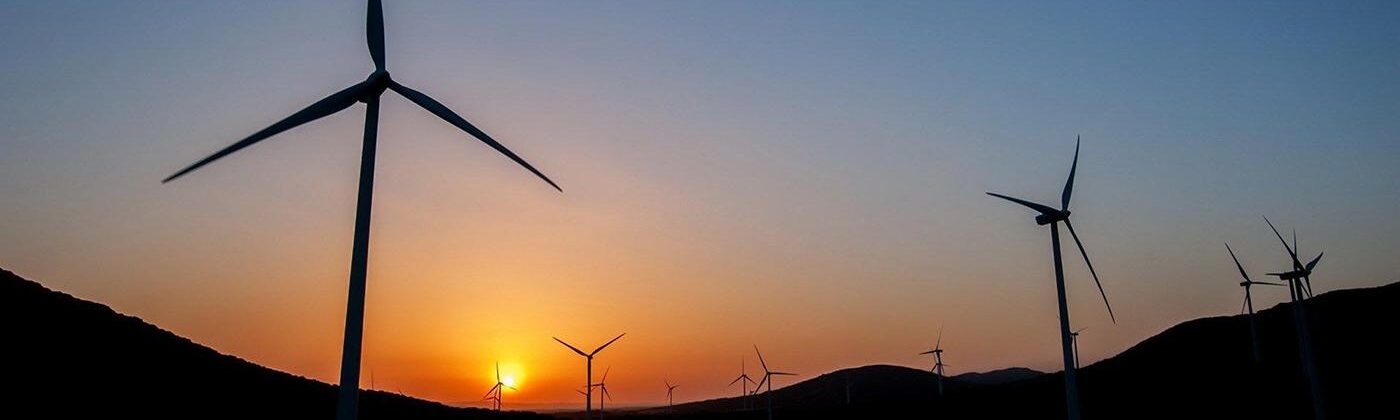
![wind turbines against a sunset sky]()
Energy and Sustainability
Developing new energy sources and technologies that benefit the environment and economy, and helping to implement those technologies.
-
![three black spiral robotic parts held in a hand]()
Robotics and Autonomy
Robotics at Cornell spans various subareas, including perception, control, learning, planning, and human-robot interaction.
-
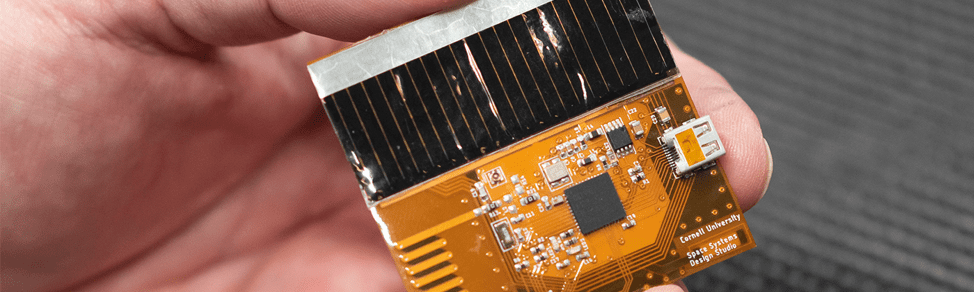
![close-up of a hand holding a yellow and black chipsat.]()
Space Science and Engineering
Satellite systems design, space “weather”, solar geo-engineering, space-system design, cubesats, optical and radar satellites for remote sensing, and methods and tools for the detection of extrasolar planets.