The way humanity explores and exploits space has dramatically changed in recent years. The commercialization of space travel now allows successful, innovative entrepreneurs to compete with the advances of government programs and agencies. Moreover, humanity is on the cusp of establishing a permanent and sustainable lunar settlement, which will become a paving ground for sending humans to Mars. Building on Cornell’s legacy of spacecraft innovation, exploration, systems engineering and entrepreneurship, we are pushing the boundaries of what is possible in this new space ecosystem.
-
714
Hours that astronaut and Cornell Engineering alumnus George David Low ’80 logged in space.
-
3,700,000,000
Miles from Earth was Voyager 1 when it photographed the planet as a “pale blue dot,” as Cornell astronomer Carl Sagan coined it.
-
2.5
Grams is the weight of each Sprite Chipsat, the world’s smallest free-flying satellites, developed at Cornell and deployed in orbit.
-
18,000
Antennae at Jicamarca Observatory, a radar system that monitors space weather and is directed by engineering professor David Hysell.
Latest News
-
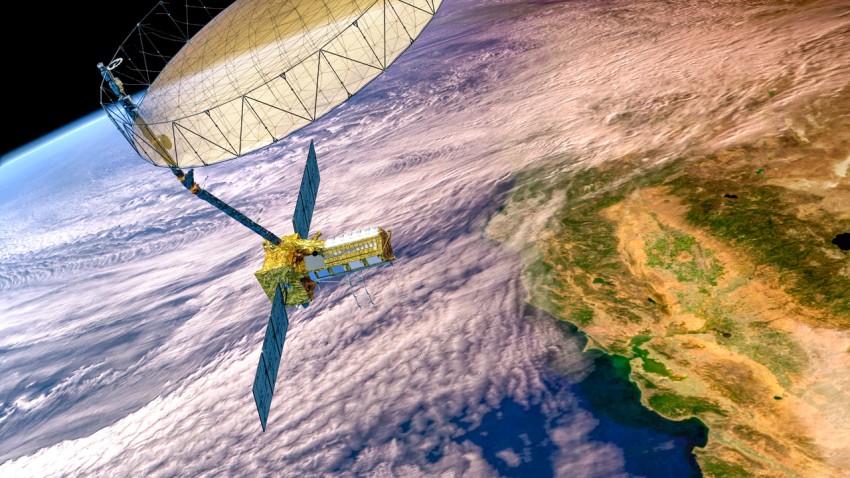
![Artist’s rendering of the NASA-ISRO SAR satellite]()
Radar satellite will give new view of changes to Earth’s surface
NASA and the Indian Space Research Organization are launching a satellite that uses synthetic aperture radar – and Cornell expertise – to monitor nearly all the planet’s land- and ice-covered surfaces twice every 12 days.
-
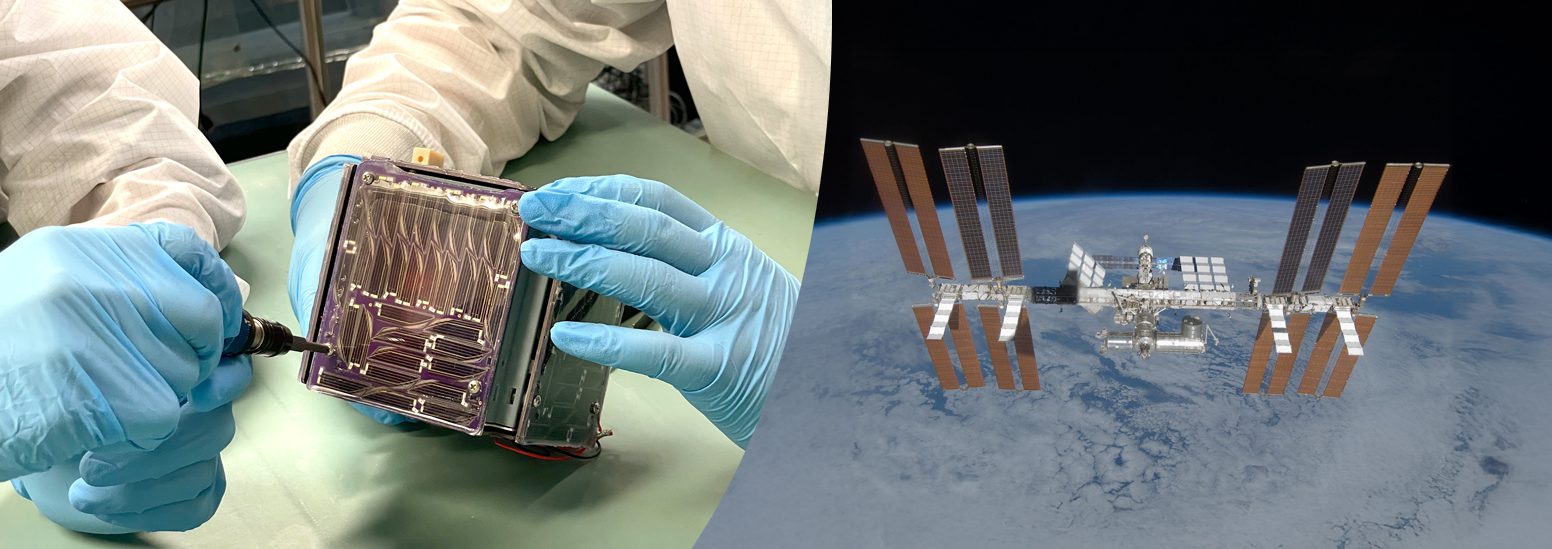
Student-designed technology bound for space station
A pair of student-led projects that feature small, low-cost satellites and light sails are headed to the International Space Station for testing.
-
Cornell helps local company bring space docking tech to orbit
With support from Cornell’s research and testing facilities, deep-tech company AVS US – with facilities just outside Ithaca – successfully launched two spacecraft aboard a SpaceX Falcon 9 rocket on June 23
Select Centers and Facilities
- Cornell Center for Astrophysics and Planetary Science
- Space Systems Design Studio
- Cornell Center for Materials Research
- Carl Sagan Institute
- New York Consortium for Space Technology Innovation and Development
- Air Force Research Laboratory Regional Hub Network – Mid-Atlantic
- Jicamarca Observatory
Select Programs
- Minor
- B.S.
- M.Eng.On Campus
- M.Eng.Distance Learning
- M.S.
- Ph.D.
-
Mechanical Engineering
Involves the design and analysis of machines, engines, and systems. Perfect for those fascinated by motion, energy, and innovative mechanical solutions.
-
Aerospace Engineering
Involves designing and testing aircraft and spacecraft. It’s ideal for those excited by flight, space exploration, and advancing technologies in propulsion and aerodynamics.
-
Electrical and Computer Engineering
Focuses on developing electrical systems, from circuits to computers. Great for those interested in hardware, software, and advancing technology.
-
Systems Engineering
Focuses on designing and managing complex systems. Ideal for those interested in coordinating processes to create efficient, scalable solutions for global challenges.